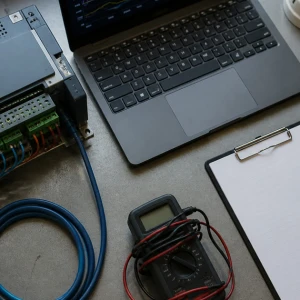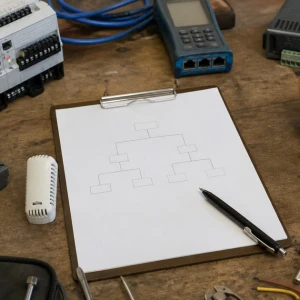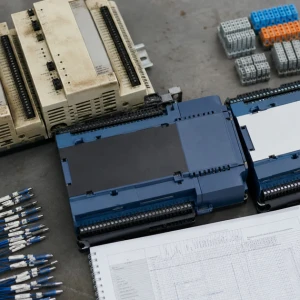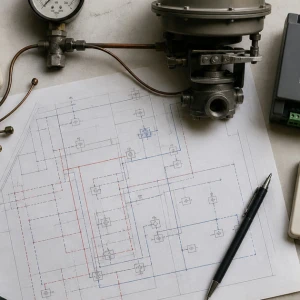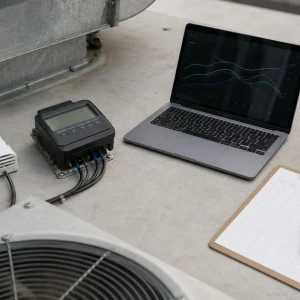


A commercial BAS retrofit modernizes automation that has become obsolete, fragmented, unsupported, difficult to operate, or unable to support current facility priorities. ClimateService develops authorized Chicago controls projects around the installed system and real operating consequences. The work owns broad automation migration; a controller-only DDC upgrade, pneumatic conversion, new equipment integration, routine service, or mechanical replacement remains a separate and coordinated scope.
Confirm why modernization is justified
Drivers may include unsupported controllers, inaccessible software, unreliable networks, scarce parts, lost backups, confusing graphics, chronic overrides, incomplete alarms, weak histories, tenant changes, equipment projects, or dependence on one undocumented workstation. Age alone does not define the project. The assessment connects current limitations with operations, maintenance, risk, staff capability, and planned building work before selecting a migration path.
Inventory the installed automation estate
Controllers, panels, power supplies, trunks, gateways, workstations, servers, licenses, databases, field devices, wiring, pneumatic components, points, graphics, sequences, schedules, alarms, trends, integrations, remote access, and available documentation are mapped. Field verification matters because drawings and software databases often contain abandoned, renamed, or duplicated assets. Unknown conditions become explicit allowances or investigation items rather than hidden assumptions.
Classify what can remain in service
Retained controllers and devices should have verified function, support path, communication compatibility, environmental condition, adequate capacity, accessible configuration, and a role in the future architecture. Reuse can control disruption, but preserving unreliable components may transfer the same failures into a new front end. Decisions are recorded by asset and function so the project does not default to either unnecessary replacement or unsupported retention.
Recover sequences before replacing hardware
Existing code, graphics, operator knowledge, trend behavior, field observation, drawings, and equipment documentation are compared to determine current and intended operation. A retrofit should not blindly copy years of temporary overrides and undocumented edits. Ambiguous staging, reset, safeties, recovery, and interlocks are resolved with the responsible owner or designer before they become permanent logic in new controllers.
Design the future controls architecture
The plan defines supervisory platform, controller distribution, panel locations, input and output capacity, networks, addressing, gateways, field signals, retained devices, power, expansion, database organization, naming, graphics, histories, alarms, access, backups, and integration boundaries. Enterprise network and cybersecurity requirements remain with authorized stakeholders. The architecture should be maintainable by facility operations, not merely functional on turnover day.
Organize point and database migration
Each useful point receives a source, name, unit, range, command permission, alarm need, trend need, graphic destination, history mapping, and relationship to an approved sequence. Duplicate and abandoned points are separated from active scope. Consistent naming and equipment hierarchy help operators navigate the system and allow later service records to match physical assets without relying on private programmer shorthand.
Plan phases around occupied operations
Cutover planning considers shared plant, critical zones, seasonal conditions, tenant schedules, equipment availability, temporary control, old-to-new interfaces, electrical isolation, network windows, access, communication, rollback, and restoration. Pilot areas can expose mapping and sequence issues before broader migration. Each phase has a stable stopping point so the building is not left dependent on incomplete programming or uncontrolled manual operation.
Preserve backups and rollback points
Existing databases, controller programs, graphics, configurations, licenses, and known settings are archived where accessible. New work receives versioned milestones and documented deployment records. A rollback plan states what can be restored, by whom, and under which conditions. Backups do not replace testing, but they reduce dependence on memory when a cutover reveals an unexpected field condition.
Commission new controls against physical systems
Point-to-point checks verify wiring, identity, scaling, and command rights. Functional tests exercise schedules, modes, staging, resets, alarms, safeties, fallback, shutdown, restart, and representative occupied results. Controllers and graphics are compared with sensors, actuators, fans, pumps, valves, dampers, compressors, heat, cooling, airflow, and water. Deferred seasonal tests receive conditions and ownership.
Rebuild operator information deliberately
Graphics, alarms, trends, schedules, navigation, roles, and reports are configured around decisions facility staff must make. More data is not automatically better. Important states and exceptions should be visible without burying operators in nuisance alarms or decorative screens. Training uses actual migrated equipment, explains retained boundaries, and identifies which changes staff may make and which require controlled service.
Retire legacy components without losing history
Removed controllers, panels, workstations, gateways, wiring, and pneumatic tubing are identified according to project scope. Abandoned components should not remain energized, ambiguously labeled, or confused with active control. Historical trend exports, alarm records, programs, point maps, and asset relationships are retained where required and practical so operations do not lose useful context during platform change.
Close with a maintainable BAS baseline
ClimateService documents final architecture, retained and replaced assets, points, sequences, programs, databases, graphics, alarms, trends, schedules, access boundaries, backups supplied, test results, deferred conditions, operator turnover, legacy disposition, limitations, and open work within its role. The facility receives a traceable automation baseline designed for continued service rather than another undocumented generation.