Heating & Cooling Chicagoland

Commercial DDC Controls Upgrade

A commercial DDC controls upgrade renews specific controllers, panels, power, inputs, outputs, wiring, and programming while preserving approved sequences and coordinating retained field devices and supervisory systems.

EPA 608 Type II CertifiedR-404A · R-134a · A2L
Licensed & InsuredCOI & additional insured
24/7 Emergency ResponseMinimize downtime
Commercial & FacilitiesRestaurants · retail · warehouses
Confirm Local Scope

Confirm Local Scope

Separate controller limits from sensors, devices, networks, mechanical faults, and broader BAS needs.

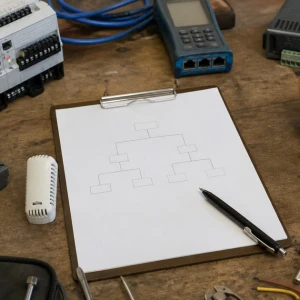
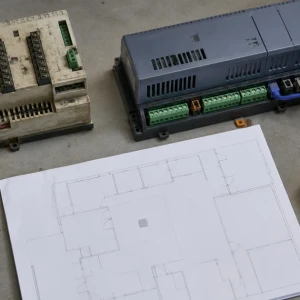
Map the Old Panel

Map the Old Panel

Record modules, points, power, wiring, terminals, relays, network, safeties, labels, and backups.

Size the New DDC

Size the New DDC

Match inputs, outputs, signals, relays, memory, communication, power, enclosure, devices, and future needs.

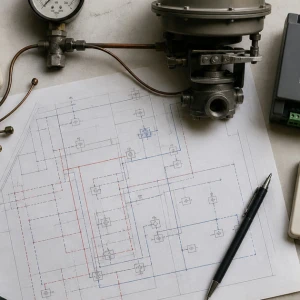
Transfer with Control

Transfer with Control

Use isolation, labels, backups, terminal mapping, temporary operation, cutover, rollback, and restoration.

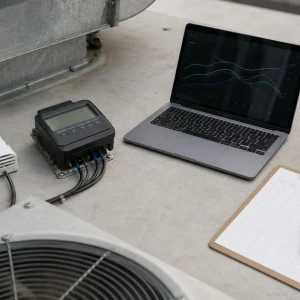
Test Points and Logic

Test Points and Logic

Verify every signal, field device, mode, stage, alarm, safety, shutdown, restart, and physical response.

Deliver Final Backups

Deliver Final Backups

Provide program, database, point map, sequence, network record, settings, labels, tests, limits, and owners.

Controller-Level Need

Failures, support, parts, programs, capacity, environment, power, software, devices, networks, and equipment plans prove scope.

Existing Panel Record

Modules, points, power, relays, terminals, enclosure, grounding, network, labels, wiring, safeties, devices, and backups are captured.

Sequence Preservation

Code, drawings, trends, operator knowledge, staging, resets, timers, proof, alarms, safeties, shutdown, and restart reconcile.

Hardware Capacity

Point types, signals, relays, expansion, memory, communication, power, heat, enclosure, devices, and future allowance guide selection.

A commercial DDC controls upgrade renews a defined controller, panel, or equipment-control layer without automatically replacing the entire BAS. ClimateService supports authorized Chicago projects where obsolete, unreliable, damaged, or capacity-limited direct digital controls need a planned transition. The scope is narrower than broad BAS modernization and different from pneumatic conversion, equipment integration, or a field-device repair that does not require controller renewal.

Confirm the controller-level problem

Failure history, offline events, unstable inputs or outputs, unavailable parts, lost programs, insufficient capacity, environmental damage, power issues, software support, and planned equipment changes are reviewed. A controller should not be replaced solely because a sensor, actuator, network segment, or mechanical component failed. The assessment proves which limitations belong to the controller and which surrounding conditions must be corrected with it.

Record the existing DDC panel

Controller model, firmware, program, database, input and output assignments, expansion modules, power supply, transformer, relays, terminals, enclosure, grounding, network, labels, spare capacity, connected devices, safeties, and available backups are inventoried. Photographs and field tracing reconcile documentation with actual wiring. Unknown or abandoned conductors are identified before they are transferred to new hardware.

Preserve the approved operating sequence

Existing code is compared with drawings, graphics, trends, operator knowledge, equipment documentation, and physical behavior. Temporary patches and overrides are not copied blindly. Staging, reset, limits, timers, proof, alarms, safeties, fallback, shutdown, and restart logic are clarified before translation so the new controller preserves intended operation rather than inheriting unexplained defects.

Size inputs, outputs, memory, and power

Universal, analog, and binary points; signal types; relay loads; expansion; program complexity; trend and alarm needs; communication; transformer capacity; heat; enclosure space; and future allowances influence hardware selection. Spare capacity should be deliberate, but oversized complexity is not a substitute for a clear design. Connected field devices must be compatible with the new controller or receive an explicit interface decision.

Plan wiring transfer and panel organization

Terminal mapping, conductor labels, commons, shielding, grounding, separation, fusing, relays, transducers, power, network, safeties, and field-device circuits shape the cutover. Existing wiring may contain undocumented splices or shared signals. The plan defines which circuits remain, which are corrected, and how each point will be proven before the old controller is removed from service.

Coordinate supervisory and network compatibility

The upgraded controller must communicate through the approved BAS architecture with correct addressing, object or point mapping, update behavior, time, alarms, trends, commands, and graphics. Gateways and enterprise network requirements receive responsible review. A controller that runs locally but cannot be backed up, observed, or supported through the intended system is not a complete upgrade.

Prepare a controlled equipment outage

Controller replacement can stop fans, pumps, valves, dampers, compressors, heat, cooling, or shared plant sequences. Work planning addresses affected spaces, operating state, tenant or process needs, electrical isolation, temporary control, weather, access, communication, backup, rollback, and restoration. Critical and shared equipment may require phased point transfer or an agreed temporary operating method.

Program with traceable revisions

Point definitions, ranges, logic, setpoints, timers, alarms, histories, schedules, and communication are built from approved records and identified field conditions. Each deployment receives a version, backup, change purpose, and test status. Generic templates can accelerate setup, but equipment-specific sequences and safeties must be verified instead of assumed from another panel.

Prove every transferred input and output

Point-to-point checks verify physical identity, wiring, power, signal, scaling, polarity, command rights, feedback, fail state, and BAS representation. Sensors are compared with suitable references. Actuators, valves, dampers, relays, drives, and proof devices are observed physically. Problems discovered in retained devices are documented and corrected or assigned rather than hidden with software.

Exercise controller logic under real states

Functional testing covers enable, disable, modes, stages, resets, modulation, timing, interlocks, alarms, safeties, loss of communication, power recovery, shutdown, restart, and representative equipment and zone response. The exact tests follow the approved sequence. Seasonal or load-dependent states that cannot be reached are listed with future conditions and responsible follow-up.

Update the BAS and panel record

Graphics, point names, network maps, controller inventory, panel schedules, labels, programs, databases, alarm routes, trend assignments, and service documentation should reflect the final installation. Removed modules and abandoned wiring are identified according to scope. Clear records prevent the next technician from troubleshooting a controller or point that no longer exists.

Close with a supportable DDC upgrade

ClimateService documents the reason for upgrade, retained and replaced hardware, panel and wiring condition, point map, sequence basis, programs and backups supplied, network boundary, test results, field-device findings, restored overrides, deferred conditions, limitations, and open work within its role. Facility teams receive a controller baseline that can be operated, maintained, and included in later BAS planning.
Wiring Transfer

Terminals, labels, commons, shielding, grounding, fusing, relays, transducers, safeties, unknown conductors, and proof receive a plan.

Point-to-Point Proof

Identity, power, signal, scaling, polarity, commands, feedback, fail states, references, field movement, and BAS display verify.

Logic Under Load

Modes, stages, resets, modulation, timing, interlocks, alarms, safeties, communication loss, recovery, and space response are exercised.

Supportable Record

Hardware, points, program, backup, network, tests, labels, graphics, retained devices, deferred states, limits, and owners transfer.

Commercial DDC Controls Upgrade Questions

How is a DDC controls upgrade different from a full BAS retrofit?

A DDC upgrade renews a defined controller, panel, or equipment-control layer while retaining the wider supervisory platform and much of the installed architecture. A BAS retrofit addresses broader networks, databases, graphics, multiple panels, access, histories, and migration strategy. An assessment should confirm whether the limitation is local enough for a controller upgrade or system-wide enough for modernization.

Can existing sensors and actuators stay during a DDC upgrade?

They can when variable, range, signal, power, wiring, application, condition, mechanical function, and controller compatibility are verified. Each retained device should be tested through its point and physical response. A new controller cannot correct a biased sensor, slipping actuator, leaking valve, binding damper, or unreliable conductor, so field findings need explicit resolution.

Will equipment need to stop during controller replacement?

Usually the affected equipment or control functions require a planned interruption for isolation, wiring transfer, programming, point checks, and functional testing. The reach depends on shared sequences and plant relationships. Planning should cover operating consequence, occupants or processes, temporary control, weather, communication, backups, rollback, restoration, and any states that require later load or seasonal verification.

What records should accompany a new DDC controller?

Useful records include controller and module identity, firmware, point and terminal map, power and network information, final program and backup, sequence basis, settings, alarms, trends, schedules, graphics updates, point-to-point results, functional tests, retained-device findings, panel labels, restored overrides, deferred conditions, known limitations, and open-item ownership. Deliverables follow the authorized project scope.

Commercial BAS and BMS Service

Commercial BAS and BMS service keeps building automation usable through disciplined review of access, schedules, alarms, trends, points, field devices, equipment response, records, and open issues.

Commercial HVAC Controls Integration

HVAC controls integration connects equipment and building automation through an approved point map, safe control boundaries, tested sequences, usable graphics, alarms, trends, records, and operator turnover.

Commercial HVAC Controls Troubleshooting

Controls troubleshooting follows a reported HVAC behavior through schedules, commands, controllers, networks, outputs, field devices, equipment, distribution, and space conditions to isolate the real fault.

Sensors and Control Devices Troubleshooting

Sensor and control-device troubleshooting isolates field-level faults through reference measurements, installation review, wiring and signal tests, physical movement, equipment response, calibration, and records.

Commercial BAS Retrofit

A commercial BAS retrofit replaces obsolete or fragmented automation through a controlled plan for controllers, networks, devices, sequences, points, graphics, alarms, histories, access, phasing, tests, and operator turnover.

Commercial Pneumatic-to-DDC Retrofit

A pneumatic-to-DDC retrofit converts legacy air-powered controls to traceable digital operation through a zone and device inventory, sequence recovery, interface decisions, electrical planning, phased cutover, commissioning, and records.

Remote HVAC Monitoring and Energy Benchmarking

Remote HVAC monitoring and energy benchmarking turn verified controls data into recurring operational review through defined points, context, baselines, alarms, trend analysis, responsibilities, and response workflows.

Call us: (312) 940 6970