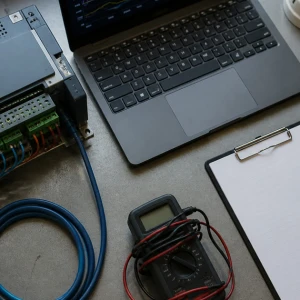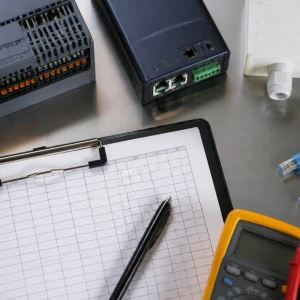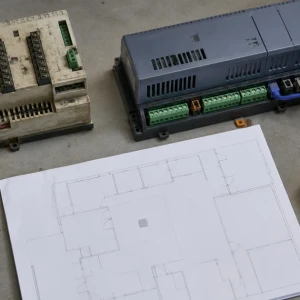


Commercial HVAC controls troubleshooting is used when equipment, zones, schedules, commands, alarms, or sequences behave incorrectly and the source has not been proven. ClimateService traces authorized Chicago systems from the observed symptom through automation and into the physical HVAC process. The goal is a defensible cause and repair boundary, not a reset, random parts replacement, or a programming change made before evidence is preserved.
Describe the control symptom precisely
Identify affected equipment and spaces, first occurrence, frequency, schedule, weather, occupancy, operating mode, alarms, operator actions, recent service, power events, and whether the issue clears by itself. “Not working” may mean no command, an ignored command, incorrect staging, unstable response, false feedback, or insufficient mechanical capacity. Precise behavior determines which evidence matters and when it must be captured.
Preserve the active fault state
When safe, record modes, setpoints, commands, outputs, feedback, sensor values, controller status, alarms, histories, communication quality, equipment safeties, and physical conditions before clearing or overriding anything. Screenshots without point identity or time context are weak evidence. Repeated resets can erase sequence and turn an intermittent problem into a longer and more disruptive investigation.
Trace the full command chain
A typical chain may run from schedule and occupancy through supervisory enable, local setpoint, controller logic, output, relay, drive or actuator, equipment stage, proof, distribution, and zone result. Each handoff can fail differently. Troubleshooting tests the chain in order so a stopped fan is not blamed on software when a local safety, disconnect, relay, drive, or motor is preventing operation.
Compare displayed values with reference conditions
A temperature, humidity, pressure, airflow, current, valve position, or fan status can look reasonable while representing the wrong point, range, location, scale, or physical device. Reference instruments and direct observation help separate sensor bias from actual process conditions. Device-level calibration, wiring, mounting, and replacement move to the dedicated sensors and control-devices scope once the issue is narrowed.
Examine sequence prerequisites and lockouts
Equipment may wait for plant availability, outdoor limits, occupancy, smoke or life-safety status, proof signals, freeze protection, pressure, flow, valve position, minimum off time, lead-lag assignment, another stage, or an interlock. The sequence should be compared with the current state and approved intent. Bypassing a prerequisite to force operation can create damage or conceal the true initiating condition.
Investigate intermittent communication faults
Controller power, trunks, topology, addresses, termination, polarity, shielding, grounding, connectors, gateways, traffic, duplicate devices, environmental conditions, and recent replacements can create stale values or sporadic offline events. A network alarm does not always mean the cable is the cause. The technician correlates timing, affected segments, controller health, and physical operation while respecting enterprise network and platform ownership.
Separate control failure from mechanical response
A correct command cannot overcome a failed compressor, slipping belt, blocked coil, seized valve, damaged damper, low flow, refrigerant fault, or insufficient capacity. Conversely, replacing mechanical components will not resolve an incorrect schedule, sensor, output, or sequence. ClimateService verifies both sides far enough to assign repair to BAS, device, electrical, equipment, distribution, hydronic, refrigeration, or facility operations.
Use trends to reproduce timing and dependencies
Targeted histories can connect setpoint, command, feedback, sensor, stage, alarm, plant condition, outdoor weather, and zone result. Sampling and retention must be appropriate for the behavior; a slow interval can miss cycling while excessive points obscure the event. Trend collection receives a start condition, review owner, and decision threshold so monitoring leads to action rather than an unattended data archive.
Control overrides during diagnosis
Temporary commands can be useful when authorized and safe, but each override needs purpose, affected points, limit, observer, expiration, restoration, and recorded result. Existing overrides are treated as possible causes. Protection and life-safety functions are not defeated to prove a theory. If a test requires operating outside normal conditions, risk and responsible approval must be explicit.
Repair only after the fault boundary is proven
Corrective work may involve configuration, schedule, point mapping, program logic, controller, power, wiring, sensor, actuator, relay, gateway, communication, or a routed mechanical repair. Program changes should preserve backups and approved sequences. When evidence is incomplete because the required load, season, or operating mode is unavailable, the closeout states the remaining hypothesis rather than presenting certainty.
Verify the exact behavior that failed
Verification repeats the relevant schedule, command, mode, sequence, stage, alarm, shutdown, restart, device motion, equipment response, distribution result, and representative zone condition. A cleared alarm alone is not proof. Intermittent cases may require focused monitoring with named points, conditions, expected range, reviewer, and escalation criteria after the immediate repair.
Close with a controls fault narrative
ClimateService documents the complaint, system boundary, captured fault state, command chain, point and field checks, confirmed cause, changes or repairs, backups, tests, restored overrides, unavailable conditions, open mechanical or network work, and recommended follow-up. Facility teams receive a concise explanation of why the behavior occurred and what now demonstrates correction.