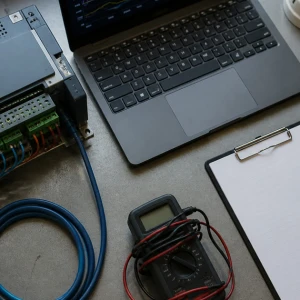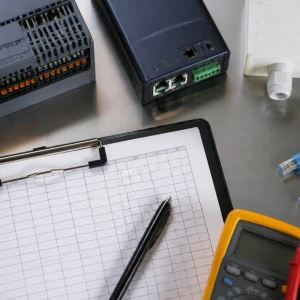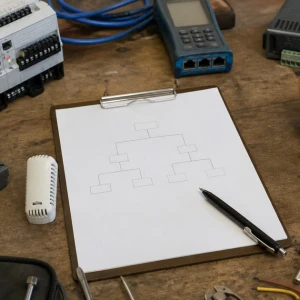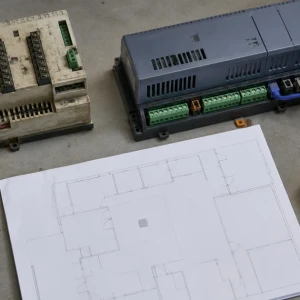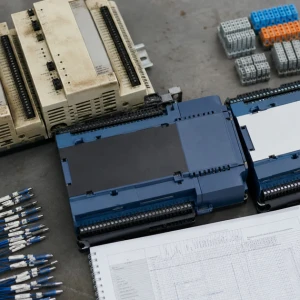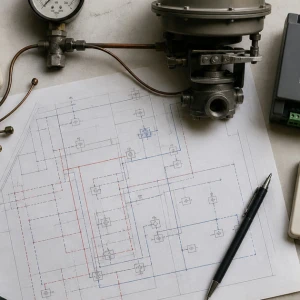


Commercial HVAC remote monitoring and energy benchmarking use verified BAS, BMS, DDC, equipment, and meter information to identify operating exceptions and longer-term patterns. ClimateService helps authorized Chicago facilities define what to observe, why it matters, who reviews it, and what action follows. Monitoring supports decisions; it does not replace field diagnosis, guarantee savings, provide an emergency-response promise, or turn unreliable points into evidence.
Begin with an operational question
A monitoring program should target a decision: confirm schedules, detect simultaneous heating and cooling, identify unstable pressure, watch a recurring alarm, compare similar equipment, track plant staging, evaluate after-hours operation, or establish a facility baseline. Collecting every available point creates noise. Each question receives relevant assets, variables, context, expected behavior, review frequency, and a defined next action.
Verify source points before trusting histories
Point identity, sensor application, units, range, scaling, location, timestamps, controller status, update behavior, overrides, and physical response are checked. A smooth graph can still come from a biased sensor or wrong mapping. Reference measurements and equipment observation establish whether a point is suitable for monitoring, diagnostic context only, or correction before inclusion in a benchmark.
Choose trend intervals that fit the behavior
Rapid cycling, actuator hunting, starts, alarms, and short control events require different sampling than seasonal load, schedule compliance, or monthly utility comparison. Change-of-value and fixed intervals have tradeoffs. Retention, storage, timestamps, gaps, and export format are planned so the pattern remains visible without creating an unmanageable archive that no one reviews.
Add weather, schedule, load, and occupancy context
Outdoor temperature and humidity, calendar, operating hours, tenant or process use, setpoints, occupied area, equipment availability, maintenance events, and unusual conditions help explain change. Consumption or runtime without context can make a healthy high-load period look inefficient or hide after-hours operation behind a favorable total. Context is documented consistently enough for comparisons to remain defensible.
Define baselines and comparison groups carefully
A baseline states period, assets, boundaries, units, operating conditions, data completeness, exclusions, and known changes. Similar rooftop units, air handlers, pumps, zones, or sites may form comparison groups when capacity, schedule, use, weather exposure, and control strategy are reasonably aligned. Benchmarking is used to prioritize investigation, not to declare a fault from one unmatched number.
Configure alarms around response capability
An alarm needs a trustworthy point, meaningful condition, delay, priority, route, recipient, acknowledgment, escalation, and expected response. Thresholds should distinguish persistence and operating mode where appropriate. Flooding staff with nuisance messages trains them to ignore important events. Monitoring design aligns alarm volume with the people and workflows actually available to investigate and correct conditions.
Watch schedules and overrides as operating risks
Occupied commands, holidays, optimum-start behavior, after-hours requests, manual values, disabled logic, setpoint changes, and override duration often explain avoidable runtime or comfort complaints. Monitoring can flag exceptions, but restoration still requires authorized review. Every override should have purpose, owner, expiration, and verification so automatic alerts do not become another ignored list.
Use equipment signatures instead of isolated values
A useful signature may connect command, status, current, valve or damper position, temperatures, pressure, airflow, plant availability, stage, alarm, and zone result. Relationships reveal whether equipment started, delivered the intended effect, and stopped appropriately. The exact signature differs for chillers, boilers, rooftop units, VRF, refrigeration, pumps, fans, and air handlers.
Create an exception review workflow
Each exception receives time, asset, observed pattern, likely boundary, operating consequence, supporting trends, required field checks, responsible reviewer, priority, and closure status. Remote evidence can narrow the visit, but it may not prove sensor condition, physical position, leaks, airflow, water, sound, vibration, or equipment damage. Field verification remains part of responsible diagnosis.
Separate monitoring from engineering and compliance claims
Energy studies, regulatory reporting, utility submissions, carbon accounting, measurement and verification, and capital engineering may require specific methods and qualified ownership outside this HVAC controls service. ClimateService can provide relevant operating data and records within scope. The monitoring program states its boundary so an internal trend review is not presented as a certified audit or guaranteed result.
Review whether the program still serves the building
Equipment changes, tenant turnover, renovated areas, new schedules, sensor replacement, BAS upgrades, network changes, added meters, and revised operating priorities can invalidate old points or baselines. Periodic review removes abandoned data, updates context and responsibilities, and checks whether identified exceptions were resolved. A monitoring program should evolve with the facility rather than preserve stale assumptions indefinitely.
Receive a monitoring record that leads to action
ClimateService documents objectives, assets, selected points, verification status, intervals, retention, context, baselines, alarms, recipients, dashboards or exports, exception workflow, observed findings, field-verification needs, limitations, and responsible follow-up within its role. Facility teams gain a repeatable operating process and prioritized evidence, not simply remote access to another screen.