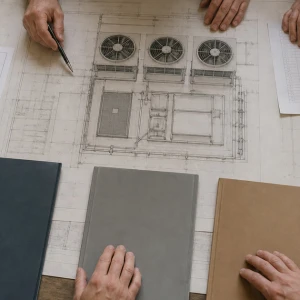


Commercial HVAC project funding and payment questions should begin with a defined facility need and reviewable technical scope. ClimateService helps Chicago buyers prepare equipment, operational, timing, estimate, phasing, and acceptance information for authorized financial discussions. This page does not offer financing, promise approval or terms, recommend lenders, or provide accounting, tax, legal, or investment advice.
Define the HVAC project before discussing funding
Replacement, retrofit, controls modernization, distribution correction, redundancy, capacity expansion, and phased portfolio work have different asset lives, schedules, risks, and deliverables. The request should name equipment, served operations, desired outcome, project boundary, and technical owner. Funding a vague “HVAC upgrade” creates confusion when reviewers cannot tell what work or result the authorization supports.
Use a scoped estimate as the commercial basis
A project estimate can identify equipment, quantities, labor, access, rigging, controls, electrical and mechanical interfaces, permits, phasing, startup, verification, assumptions, and exclusions. Early planning may use a preliminary basis, but the maturity must be stated. Funding discussions should distinguish verified scope from allowances, options, and unresolved conditions that could change final delivery.
Document the operational reason for the project
Repeated failures, lost redundancy, unavailable parts, unsafe conditions, leaks, comfort impact, process interruption, tenant exposure, controls limits, facility change, or planned modernization may support the request. Use service history, inspection findings, readings, photographs, and affected operations. Avoid unsupported savings, guaranteed payback, or predicted failure dates that the evidence cannot establish.
Identify ownership and decision authority
The equipment owner, building owner, tenant, property manager, operating company, parent organization, or public institution may have different approval and funding processes. ClimateService documents physical equipment and scope but does not interpret leases or governance. Buyers should identify who approves technical need, commercial terms, funding method, shutdown, contract, and final acceptance.
Prepare neutral questions about available methods
Facility reviewers may consider internal capital, reserves, leasing, financing, staged payments, or other authorized structures. Relevant questions can include ownership, term, cash-flow timing, approval requirements, security interests, early termination, project changes, equipment inclusion, and documentation. Availability and suitability depend on actual providers and buyer review, not this HVAC page.
Connect payment timing with project milestones
Design, submittals, equipment ordering, fabrication, delivery, mobilization, installation, controls, startup, commissioning, and closeout can occur at different stages. Commercial terms may reference milestones, but the technical schedule should define what each stage delivers and what evidence supports acceptance. Billing documents govern actual timing; Capital Planning connects that timing to the broader approval structure.
Account for phasing and portfolio strategy
Projects may be phased by building, floor, equipment condition, season, lease event, procurement, or redundancy. Phasing can align with approvals and preserve operations, but may add mobilization, temporary work, controls integration, and repeated commissioning. Funding review should compare the technical and operational consequence of each sequence, not assume multiple phases are automatically easier.
Separate project funding from service billing
Funding a major capital project is different from invoice terms for maintenance or repair. Contracts, Agreements, and Billing owns recurring service and invoice processes. Costs and Pricing owns cost drivers. Quotes owns proposal scope. This page organizes funding-path questions so the word “payment” does not merge unrelated customer journeys or create unsupported financing claims.
Review options against the same completion scope
Funding comparisons are meaningful only when equipment, controls, installation, testing, commissioning, closeout, and actual coverage documents are equivalent. Excluding integration or acceptance may lower the financed amount while leaving essential work unfunded. Buyers should normalize technical delivery before comparing commercial methods, then involve authorized financial and legal reviewers for terms.
Identify schedule and approval dependencies
Internal meetings, procurement, provider review, documents, permits, equipment availability, vendor submittals, access, weather, utility coordination, tenant notices, and shutdown windows can affect timing. The capital request should identify which decisions must occur before ordering or mobilization. ClimateService avoids promising approval or completion dates controlled by external parties.
Plan for changes without hiding uncertainty
Concealed conditions, altered quantities, equipment substitution, design development, phased discoveries, or facility changes can affect scope. The estimate should state assumptions and change procedures. Funding reviewers can then decide how contingency, additional approval, or revised documents are handled under their policies. False precision at the beginning creates harder decisions during installation.
Prepare a complete handoff for authorized review
The funding question package can include facility and equipment identity, project goal, evidence, estimate, options, phasing, operational impact, schedule, assumptions, exclusions, approvals, milestones, completion proof, and open risks. ClimateService supplies structured, current, practical, detailed, evidence-based, decision-ready technical context. Facility leadership and authorized advisers decide funding method and commercial terms using their own criteria and issued documents.