

Commercial HVAC maintenance and repair can happen during the same facility relationship, but they begin with different needs. Maintenance is planned asset care for equipment that is available for routine service. Repair responds to a specific defect, failure, or unacceptable operating condition. Describing the present condition accurately helps ClimateService arrive with the right scope, tools, time, and authorization path.
Choose maintenance when routine upkeep is the primary need
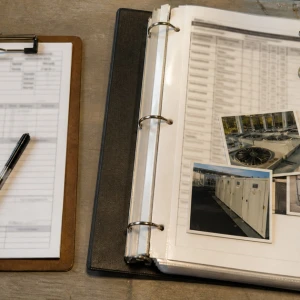
A maintenance request fits equipment that is operating and due for defined inspection, cleaning, testing, adjustment, or consumable work. The facility may want to restore normal service discipline after a missed interval, establish baseline conditions at a new property, or complete routine tasks for named assets. The goal is planned care and useful reporting, not investigation of an active failure.
Choose repair when a defect is already evident
Repair is the better starting point when equipment will not start, cannot maintain required conditions, trips a safety or breaker, leaks, makes abnormal noise, has damaged wiring or components, or has a confirmed failed part. The service request should describe affected areas, current operating state, timing, alarms, recent work, and any safe observations from facility staff. That information supports triage without asking staff to troubleshoot live equipment.
Maintenance can reveal a repair need
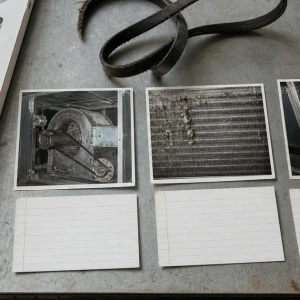
Routine work often exposes worn belts, failing bearings, damaged insulation, obstructed drains, deteriorated contactors, leaking valves, unstable sensors, or coils that require work beyond the authorized task set. The technician should document the condition and consequence. Unless the existing authorization covers the corrective work, the repair becomes a separate scope rather than an unrecorded add-on.
Repair does not replace overdue maintenance
Correcting one failed component restores a specific function; it does not automatically address filters, drains, coils, belts, safeties, controls observations, or other assets at the property. If maintenance is also overdue, the facility can authorize it as a distinct visit or coordinated workstream. Separate scopes preserve clarity about what was repaired and what routine work was completed.
Uncertain causes belong in diagnostics
A building may report warm zones, intermittent operation, high energy use, poor humidity control, or repeated complaints without a known cause. Replacing parts or repeating maintenance tasks before confirming the problem can waste time. Diagnostic work may need trend data, sequence review, measurements under load, controls coordination, or comparison across zones before a responsible repair recommendation is possible.
Urgency changes response planning, not evidence
An outage affecting tenants, inventory, a server room, or a critical operating area may require urgent repair response. The facility should identify safety concerns, affected operations, available redundancy, access contacts, and shutdown authority. Urgency does not make every suspected part correct, and emergency work still benefits from documented symptoms, measurements, and authorization boundaries.
How the commercial authorization path differs
Maintenance usually has a planned task scope and known access window. Repair may begin with diagnosis and proceed only after the facility approves labor, parts, temporary measures, or a return visit. Purchasing limits, landlord approval, tenant coordination, and third-party controls responsibilities can affect what happens during the first visit. ClimateService records these boundaries before corrective work expands.
Use condition and intent to choose the first call
If the equipment is operating and the request is routine upkeep, schedule commercial HVAC maintenance. If a known malfunction or failure is driving the request, schedule repair. If performance is poor but the cause is unresolved, begin with diagnostics. If the condition is urgent, communicate operational consequence and access requirements so response can be prioritized appropriately.
A combined facility plan can still keep scopes separate
Large properties often coordinate maintenance and repair during the same access period. That is practical when the work orders distinguish routine tasks from corrective tasks, identify affected assets, and preserve separate close-out records. The facility then receives a usable history instead of one blended note that cannot explain why labor or parts were required.
Parts availability affects the repair path
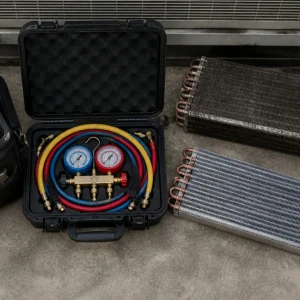
Maintenance can usually proceed with planned consumables and routine tools. Repair may depend on model-specific components, lead time, compatible substitutions, lift access, refrigerant recovery, manufacturer information, or another trade. Identifying those dependencies early helps the facility decide whether temporary operation, a scheduled return, broader assessment, or replacement discussion is appropriate. A technician should not imply that a photographed part is available or approved until sourcing and scope are confirmed.
ClimateService routes the request before work begins
ClimateService reviews the asset, current symptom, operating consequence, access, and requested outcome to identify the appropriate path. Planned upkeep stays maintenance-first. Known defects move to repair. Unresolved behavior moves to diagnostics. This routing gives Chicago building teams a clearer service expectation and reduces the risk of booking a routine visit for equipment that already needs corrective action.