

Routine commercial HVAC maintenance matters because facility decisions improve when equipment is accessible, observed, and documented before every issue becomes an outage. Maintenance does not guarantee uninterrupted operation or a fixed equipment life. It supports serviceability, identifies developing conditions, and creates a more reliable basis for repair, planning, and operating decisions.
Observable equipment is easier to manage
Filters, belts, coils, drains, electrical connections, fans, valves, dampers, safeties, and controls interfaces can change gradually. Planned access gives technicians an opportunity to record visible and measurable conditions. A facility can then respond to evidence rather than waiting for tenant complaints or a complete loss of function.
Routine work protects basic serviceability
Blocked access, heavy debris, neglected drains, deteriorated fasteners, missing panels, and undocumented modifications make later work slower and less predictable. Applicable cleaning, adjustment, consumables, and condition reporting help keep equipment reachable and understandable. Maintenance cannot restore an asset that already requires major corrective work, but it can prevent routine neglect from obscuring its true condition.
Small findings gain value when they have context
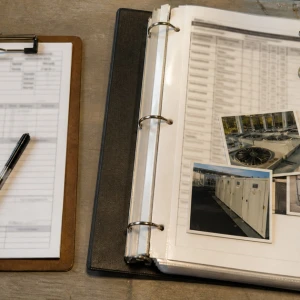
A worn belt, loaded coil, recurring drain obstruction, unstable sensor, or unusual sound is more useful when tied to a named asset, date, operating mode, and previous observation. Without stable identity, repeated notes cannot show whether the condition returned. Consistent documentation turns isolated service visits into evidence for prioritization.
Reliability is broader than avoiding breakdowns
For a commercial building, reliability includes predictable comfort, process support, ventilation, humidity control, tenant operations, access planning, and recovery options. Maintenance can expose reduced redundancy, deferred defects, or equipment that depends on one vulnerable component. The facility can address the consequence before the next high-load or restricted-access period.
Maintenance supports performance consistency
Airflow restrictions, fouled heat-transfer surfaces, control drift, worn drives, drainage problems, and poor mechanical condition can reduce stable operation. Routine service addresses applicable items and records limitations. If performance remains weak or intermittent, diagnostics should investigate the cause rather than repeating maintenance tasks without evidence.
Asset life is a decision, not a promise
Maintenance may support longer useful service by reducing avoidable stress and keeping conditions visible. Actual life also depends on design, installation, duty, environment, controls, prior care, corrosion, parts availability, and changing building needs. ClimateService does not promise a fixed extension. Reporting should help the owner judge whether continued care remains responsible.
Earlier findings create more options
A condition found during planned work may allow time to obtain parts, coordinate tenants, arrange a lift, compare repair and replacement paths, or schedule a shutdown. The same condition discovered during peak demand can leave fewer choices. The value is decision time, not a claim that every future failure was predictable.
Maintenance history improves capital conversations
Repeated failures, increasing corrective labor, declining controllability, obsolete parts, and persistent capacity limitations may indicate that the asset is moving beyond routine care. Maintenance records give assessment and replacement-planning teams better evidence. This page does not own capital planning; it explains when maintenance observations should be routed there.
A program may strengthen continuity
Individual visits can deliver useful upkeep. Facilities that need recurring cadence, standardized reports, asset history, and a consistent approval workflow may benefit from a preventive program. The program should distribute applicable tasks and preserve facility responsibility rather than implying that recurring service includes unlimited repairs.
Maintenance supports safer service planning
Known equipment condition helps the facility plan shutdowns, roof access, lifting, electrical isolation, tenant notices, and specialist coordination. It also identifies panels, fasteners, guards, or access routes that need attention before more invasive work. Routine maintenance is not a safety certification, but documented access and condition reduce surprises when repair crews must work under a limited operating window.
Deferred findings should remain visible
A recommendation loses value when it disappears between visits. The close-out should distinguish work completed, repair approved, repair deferred, monitor-only conditions, and assets awaiting assessment. A later technician can then understand the facility’s decision rather than rediscovering the same condition. Visibility also helps managers combine compatible work, obtain parts, and coordinate access without treating every observation as an emergency.
Different stakeholders use the record differently
Building engineers may need measurements and operating context. Property managers need affected areas and tenant consequence. Purchasing needs scope and authorization boundaries. Ownership may need recurring-failure and capital signals. A useful maintenance record connects these views without inflating technical notes into promises. The equipment remains the source of truth, while the report translates its condition into the decisions each stakeholder controls.
ClimateService keeps the benefit practical
ClimateService scopes routine commercial HVAC maintenance around actual equipment and Chicago facility conditions. The service supports observable condition, serviceability, stable operation, and documented next actions. Repair, diagnostics, seasonal preparation, program design, and replacement remain distinct paths. That boundary makes maintenance commercially useful without exaggerated savings or reliability promises.