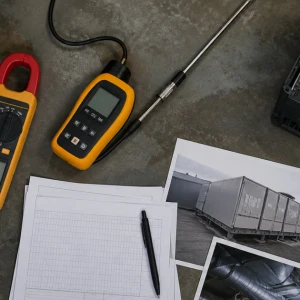


Upgrading commercial HVAC without full replacement can preserve useful equipment while correcting a defined controls, airflow, hydronic, ventilation, reliability, or serviceability limitation. The approach is valuable only when the retained system is suitable and the new components work with its mechanical and controls architecture. ClimateService develops targeted Chicago HVAC scope from field evidence rather than from a generic upgrade package.
Define the outcome before selecting components
Identify the affected spaces, operating symptoms, business consequence, current sequence, measurable target, and unacceptable result. The objective might involve scheduling, zoning, stable temperature, ventilation, runtime, pump or fan control, alarms, access, or maintenance. A product name does not establish that it addresses the actual root cause.
Verify the condition of everything being retained
Inspect relevant cabinets, coils, heat exchangers, fans, motors, pumps, piping, ductwork, valves, dampers, electrical components, safeties, controls, drainage, supports, insulation, and access. Review service history, recurring failures, parts, refrigerant, and planned replacement. Unknown condition should become an investigation item, not an optimistic assumption in the business case.
Separate root cause from visible symptom
An uncomfortable zone can involve load, distribution, sensor location, schedule, airflow, water flow, envelope, control sequence, or equipment capacity. A failed motor may result from bearing, alignment, electrical, airflow, contamination, or operating issues. Diagnostics and assessment should identify the correct system boundary before capital work is approved.
Controls modernization needs device-level compatibility
Existing sensors, actuators, relays, safeties, starters, drives, controllers, networks, protocols, schedules, graphics, alarms, and operator access must be mapped. The scope should identify reusable devices, replacements, wiring, programming, point verification, temporary operation, and final testing. A new front end cannot correct inaccurate sensors or unsuitable mechanical sequences by itself.
Fan and pump upgrades change system behavior
Motors and variable-speed drives require suitable voltage, load, cooling, bearings, grounding, bypass strategy, minimum speed, pressure sensors, flow limits, and controls. Reduced speed changes airflow or water flow, coil performance, ventilation, pressure, and terminal behavior. The intended range should be designed, started, balanced, and tested rather than selected only from motor horsepower.
Dampers, valves, and coils work as connected paths
Actuator torque, linkage, valve authority, leakage, close-off pressure, coil condition, strainers, freeze protection, economizer logic, outside air, exhaust, drainage, and access influence results. Replacing one actuator or valve may not correct damaged blades, blocked coils, unstable pressure, or incorrect sequence. Field verification should cover the complete controlled path.
Ventilation changes require responsible design context
Occupancy, outside-air need, exhaust, intake location, filtration, humidity, building pressure, frost, contaminant sources, and system capacity matter. Demand-controlled ventilation or heat recovery may be appropriate in some systems but not all. Applicable design and code responsibilities remain with qualified parties and should be named in the project.
Lifecycle value depends on the retained-system horizon
Compare the upgrade cost and benefit with expected ownership, remaining condition, future replacement, reuse potential, downtime, maintenance, and connected risks. A portable controls component may carry forward; a custom coil or adapter may not. The decision record should state which investment becomes stranded if the retained equipment requires earlier replacement.
Occupied work needs a transition plan
Work zones, shutdowns, tenant notices, controls overrides, temporary sequences, access, dust, noise, other trades, and restoration should be coordinated. Old and new devices may coexist during installation. Facility staff need to know which controls are authoritative and how abnormal operation will be detected before the permanent sequence is accepted.
Testing must prove the selected function
Installation checks, sensor calibration, point-to-point verification, drive startup, operating modes, safeties, airflow or water-flow dependencies, balancing, trends, punch-list correction, and seasonal deferrals may apply. Acceptance should compare the completed work with the defined objective and record conditions, limitations, overrides, and unresolved system factors.
Turnover preserves upgrade value
ClimateService can organize component identity, retained-equipment relationships, updated sequences and settings, controls access, startup evidence, test results, limitations, open items, and maintenance tasks within its scope. Facility teams should know how to recognize drift and whom to contact. This creates a usable baseline for the upgraded system without representing unaffected equipment as newly replaced.
Future replacement should be considered before installation
The project team should document whether new controllers, drives, sensors, valves, or other components can be reused, reconfigured, or removed when the retained equipment is eventually replaced. Physical fit, protocols, licensing, firmware, warranty, labor, and future design can limit reuse. A realistic disposition prevents theoretical recoverable value from being counted as guaranteed savings.
After the first operating period, facility staff should review alarms, overrides, trends, comfort reports, maintenance findings, and the selected functional objective. Eligible corrections can then be separated from new building conditions or unrelated retained-system failures. This follow-up gives the owner evidence about whether the partial upgrade remains an appropriate bridge or long-term configuration.