Heating & Cooling Chicagoland

Commercial Refrigeration and Walk-In Cooler Basics

This facility guide explains how fixed-site commercial refrigeration moves heat, how walk-in coolers depend on airflow and enclosure integrity, which conditions shape performance, and what evidence supports professional service.

EPA 608 Type II CertifiedR-404A · R-134a · A2L
Licensed & InsuredCOI & additional insured
24/7 Emergency ResponseMinimize downtime
Commercial & FacilitiesRestaurants · retail · warehouses
Move Heat Out

Move Heat Out

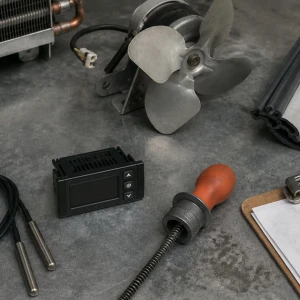
Understand how evaporator, compressor, condenser, metering, piping, controls, and fans form the refrigeration loop.

Protect the Enclosure

Protect the Enclosure

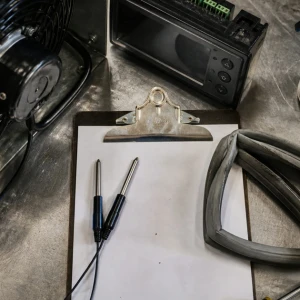
Keep panels, insulation, vapor barrier, joints, doors, gaskets, thresholds, penetrations, and floor conditions in view.

Maintain Clear Air Paths

Maintain Clear Air Paths

Recognize the effect of fans, coil ice, inlet, discharge, shelving, product clearance, and room geometry.

Manage Frost and Water

Manage Frost and Water

Connect defrost initiation, heat, termination, fan delay, pan, drain, insulation, recovery, and refreeze risk.

Compare Data with Reality

Compare Data with Reality

Treat sensors, controls, alarms, and remote trends as evidence only after physical verification.

Route the Correct Service

Route the Correct Service

Choose broad repair, cooler, freezer, restaurant, installation, replacement, or separate transport ownership by intent.

Heat-Moving Loop

Evaporator, compressor, condenser, metering, piping, valves, controls, and heat rejection operate as one fixed-site system.

Insulated Cold Room

Panels, floor, ceiling, vapor barrier, joints, penetrations, doors, gaskets, thresholds, closers, and ambient conditions resist load.

Room Air Path

Evaporator fans, coil, inlet, discharge, product clearance, shelving, ice, room geometry, and representative readings shape distribution.

Condenser Heat Release

Coils, fans, clearance, recirculation, ambient, grease, dust, mechanical-room ventilation, and compressor load affect rejection.

Commercial refrigeration keeps a fixed space or fixture below surrounding temperature by moving heat from the refrigerated side to a heat-rejection location. A walk-in cooler is therefore more than a cold box and more than a compressor. Its performance depends on the evaporator, condensing equipment, refrigerant piping, controls, airflow, defrost, drainage, doors, panels, insulation, loading, and facility environment working together.

Follow heat through a fixed refrigeration loop

The evaporator absorbs heat from room air, the compressor raises refrigerant pressure, the condenser rejects heat to outdoor or mechanical-room air, and the metering device controls flow back into the evaporator. Valves, receivers, controls, and other components vary by system. The useful lesson for facility teams is that a symptom inside the room may begin at any point in this connected loop.

Understand what the walk-in enclosure contributes

Insulated wall and ceiling panels, floor construction, vapor barriers, joints, penetrations, doors, gaskets, thresholds, closers, and surrounding conditions resist heat and moisture entry. Damage or air leakage increases load and can create condensation or frost. Refrigeration equipment may run continuously without stabilizing if the enclosure no longer controls infiltration as intended.

See why evaporator airflow matters

Evaporator fans draw room air across the cold coil and distribute it back through the space. Blocked inlets, product stacked against discharge, stopped fans, ice, changed shelving, or poor placement can create uneven temperatures. A controller sensor near the coil cannot describe every location. Air pathways and representative measurements are part of understanding room performance.

Recognize the role of heat rejection

The condenser must release both the heat collected inside and energy added by the compressor. Dirty coils, failed fans, blocked clearance, hot-air recirculation, high ambient conditions, grease, dust, or inadequate mechanical-room ventilation can increase stress. A warm walk-in can therefore originate outside the refrigerated room even when its evaporator is operating.

Know what defrost is intended to accomplish

Moisture can freeze on an evaporator and restrict airflow. Defrost removes that accumulation through system-specific timing or demand, heat source, termination, fan delay, drainage, and recovery. Too little defrost allows ice to build; poorly controlled or excessive defrost adds heat. Cooler and freezer strategies differ, so settings should follow installed design rather than habit.

Track where defrost water goes

Meltwater enters a pan and drain that need slope, trap, insulation, cleanout, suitable termination, and heat protection where required. A clear coil can still develop problems if water remains and refreezes. Overflow can affect floors, panels, product areas, and safety. Refrigeration drainage also has boundaries with building plumbing and sanitation responsibility.

Relate controls to physical operation

Sensors, setpoints, differential, compressor and fan commands, defrost, alarms, safeties, and remote monitoring coordinate operation. A digital value is useful only when point identity, location, calibration, wiring, and physical response are credible. Facility teams can report controller behavior, but qualified service should compare it with equipment and room conditions before changing settings or replacing components.

Distinguish cooler and freezer priorities

Both use the same heat-moving principles, but freezers operate at lower temperature and typically demand closer attention to defrost, fan delay, heated drains, door or frame heat, vapor control, and ice. A medium-temperature cooler emphasizes stable airflow, door traffic, drainage, and product distribution. The equipment-specific page should own repair intent when the noun is known.

Account for load created by facility use

Warm product, frequency and duration of door opening, people, lights, fan motors, defrost, changed shelving, blocked airflow, higher surrounding temperature, and damaged panels all affect runtime and recovery. These factors do not prove the equipment is healthy or faulty. They provide context that allows service data to be interpreted fairly under actual business conditions.

Use routine observations without attempting repair

Facility teams can preserve alarm history, note temperatures and locations, report door or fan behavior, identify recent loading or cleaning, document visible water or ice, and maintain clear access under approved procedures. Refrigerant, electrical, pressure, control-panel, heater, and mechanical repair require qualified service. Protection and safeties should never be bypassed to keep equipment running.

Know when a service page owns the next step

Broad failure without a known equipment noun routes to commercial refrigeration repair. A known walk-in cooler or freezer routes to its equipment page. New systems route to installation. Restaurant-modified demand routes to restaurant refrigeration. Replacement, budgeting, contracts, and transport refrigeration retain their own owners. This guide supports those pages without competing for their service intent.

Create a better professional service request

A useful request names the fixed-site equipment, affected space, observed temperatures, alarms, start time, door and loading context, recent defrost or service, visible ice or water, equipment sound or state, access, and facility contacts. ClimateService then records system identity, evidence, diagnosis, repair boundary, verification, limitations, and follow-up within the selected commercial refrigeration service.
Defrost Process

Frost, initiation, heat source, termination, fan delay, drainage, recovery, cooler or freezer design, and settings coordinate.

Digital and Physical

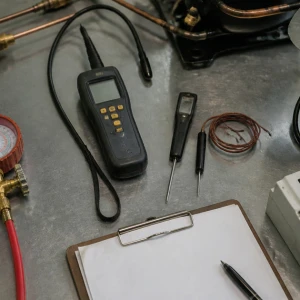
Sensors, locations, setpoints, differential, commands, alarms, safeties, remote data, equipment, and room response must agree.

Operating Load

Product, doors, people, lights, motors, defrost, shelving, airflow, ambient, panels, and business use explain demand.

Better Service Evidence

Equipment, space, temperatures, alarms, timing, doors, loading, defrost, ice, water, operation, access, and contacts support diagnosis.

Commercial Refrigeration and Walk-In Cooler Basics Questions

How does a commercial walk-in cooler remove heat?

Room air passes across the evaporator, where refrigerant absorbs heat. The compressor moves and raises the refrigerant pressure, then the condenser releases heat to outdoor or mechanical-room air. The metering device controls refrigerant entering the evaporator. Fans, piping, controls, defrost, drainage, doors, insulation, and loading determine whether that loop produces stable room conditions.

Why does airflow affect walk-in cooler temperature?

The evaporator can only cool air that reaches its coil and returns through the room. Stopped fans, ice, blocked inlets, product stacked in the discharge path, changed shelving, or poor room circulation create warm areas. A sensor near the evaporator may miss them. Representative temperature readings should be interpreted together with actual airflow and loading.

What is the difference between cooler and freezer defrost?

Both address frost that restricts evaporator airflow, but low-temperature freezers commonly require more deliberate heater or hot-gas operation, termination, fan delay, heated drainage, door heat, and vapor control. Medium-temperature coolers may use different schedules or methods. Exact settings depend on the installed equipment and application, so one universal defrost schedule is not appropriate.

What information helps a refrigeration technician diagnose faster?

Useful evidence includes equipment and room identity, observed temperatures and locations, controller values, alarms, start time, door activity, loading, recent defrost, cleaning or service, visible ice or water, fan and compressor state, weather, access, and shared-system relationships. Preserve the active condition when safe and avoid repeated resets that can erase fault history.

Commercial Refrigeration Repair

Commercial refrigeration repair traces a product-temperature or equipment complaint through the refrigerated space, evaporator, condensing equipment, piping, controls, defrost, drainage, doors, loading, and surrounding conditions.

Commercial Refrigeration Installation

Commercial refrigeration installation coordinates refrigerated spaces, evaporators, condensing equipment, piping, controls, electrical service, drainage, doors, insulation, heat rejection, commissioning, and facility operations.

Walk-In Cooler Service and Repair

Commercial walk-in cooler service connects refrigeration components with the insulated room, doors, product airflow, controls, defrost, drainage, loading, and heat rejection to correct the cause of unstable temperature.

Walk-In Freezer Service and Repair

Commercial walk-in freezer service addresses low-temperature refrigeration, evaporator airflow, frost and defrost, heated drainage and doors where present, controls, insulation, vapor integrity, loading, and recovery.

Restaurant Refrigeration Service

Restaurant refrigeration service coordinates fixed-site cold equipment with kitchen schedules, product handling, sanitation, door traffic, heat, ventilation, controls, drainage, and shared refrigeration relationships.

Call us: (312) 940 6970