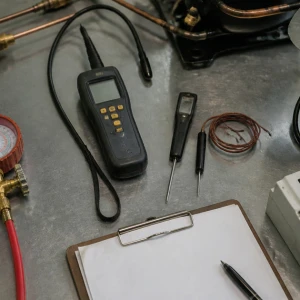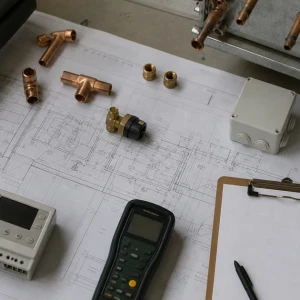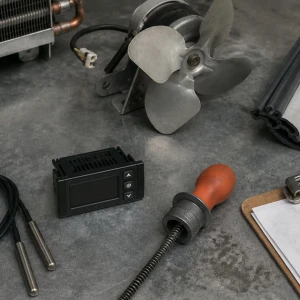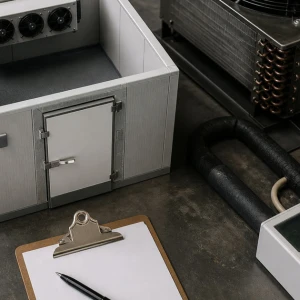


Walk-in freezer service and repair requires low-temperature evidence across the refrigerated room, evaporator, condensing equipment, piping, controls, defrost, heaters, drainage, door, panels, vapor barrier, product airflow, and operating practices. ClimateService supports authorized Chicago facilities and keeps this freezer-specific scope separate from medium-temperature cooler service, warehouse specialty design, and every form of transport refrigeration.
Capture the freezer condition before disturbing it
Representative air temperatures, controller and alarm history, frost location, evaporator fan state, compressor operation, door activity, loading, recent defrost, weather, and previous work are recorded where safe. Facility teams follow their approved frozen-product procedures. Turning the system off or clearing alarms may be necessary for safety, but it can remove evidence needed to separate cause from consequence.
Interpret low-temperature frost distribution
Uniform light frost, partial coil coverage, heavy block ice, ice at the drain, frost near a doorway, and ceiling or panel ice point to different conditions. Fans, metering, refrigerant feed, defrost, infiltration, sensor placement, door heat, and insulation are correlated. The pattern is photographed before removal when practical so later service has a defensible baseline.
Test freezer defrost as a complete sequence
Initiation, termination, heaters or hot-gas components where applicable, contactors, sensors, controller outputs, fan delay, compressor behavior, drain heat, recovery, and alarm states are evaluated. A heater that energizes does not prove the coil clears or water exits. Excessive defrost can also raise room temperature and add unnecessary load, so settings follow the installed design.
Protect the drain from refreezing
Pan condition, slope, trap, insulation, heat trace where present, wiring, termination, cleanout, routing, and downstream environment matter. Water remaining in the pan or pipe can freeze into the coil or spill onto the floor. Drain work is coordinated with electrical and plumbing boundaries; heat cable is not assumed functional merely because it is installed.
Confirm freezer evaporator airflow
Fan motors, blades, rotation, guards, coil blockage, inlet, discharge, product clearance, shelving, room paths, fan delay, and operation after defrost determine distribution. Low-temperature rooms can appear cold near the coil while distant product zones warm. Air readings are compared across representative locations and with actual loading configuration.
Evaluate the low-temperature refrigerant circuit
Compressor operation, condenser performance, ambient controls, piping, insulation, supports, valves, metering, evaporator feed, line temperatures, pressures, leak evidence, oil-management considerations, and prior repairs guide diagnosis. Qualified refrigerant procedures apply. Low suction or heavy frost is not interpreted without airflow, load, defrost, control, and system-design context.
Review door heat and vapor control
Gaskets, hinges, closer, latch, alignment, threshold, door and frame heaters where present, wiring, penetrations, panel joints, floor transitions, insulation, vapor barrier, surrounding humidity, and traffic affect frost and infiltration. Warm moist air can create ice far from the mechanical fault. Enclosure findings receive named correction instead of indefinite increases in refrigeration runtime.
Check low-temperature controls and safeties
Sensor location, reference comparison, wiring, scaling, setpoint, differential, alarm thresholds, compressor and fan outputs, defrost commands, pressure controls, oil or motor protections where applicable, contactors, power, and BAS interfaces are tested within scope. Protective devices are not bypassed to force operation. The initiating mechanical or electrical condition must be identified.
Account for loading and door operations
Warm product, frequent entry, doors held open, damaged strip curtains where used, changed shelving, blocked evaporator paths, added lights, floor moisture, and surrounding humidity can alter pull-down and frost behavior. Facility practices are documented as operating context. The repair record does not make unsupported judgments about product disposition or promise recovery independent of load.
Execute freezer work with safe access
Ice, slippery floors, low temperature, electrical heaters, ceiling equipment, heavy doors, product, sanitation, shared circuits, roof access, shutdown reach, and temporary arrangements influence the plan. The work area is protected and restored. Parts and tests are chosen from the confirmed fault boundary, while panel reconstruction or system replacement becomes a separately authorized project.
Prove defrost recovery and room stability
Verification may follow the freezer through cooling, defrost, drainage, fan delay, restart, compressor and condenser response, alarms, door closure, and representative room temperatures. A single cold reading immediately after service is incomplete proof. If normal load or a scheduled defrost is unavailable, targeted monitoring receives points, timing, expectations, and a responsible reviewer.
Close with a low-temperature service record
ClimateService documents freezer identity, complaint, initial temperatures and frost pattern, defrost and drain findings, evaporator airflow, condensing and refrigerant evidence, controls, heaters, doors, panels, loading context, confirmed cause, repair, final tests, restored settings, product boundary, limitations, and open work. The handoff supports future maintenance, seasonal operating review, reliable load comparison, and clearly distinguishes freezer conditions from cooler assumptions.