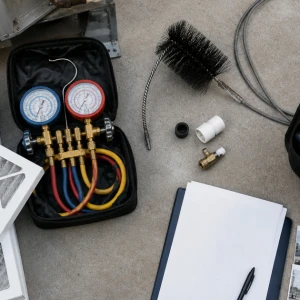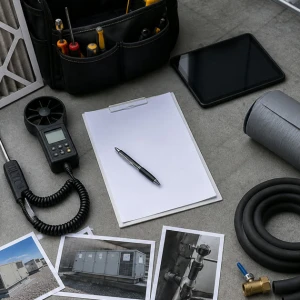


A commercial seasonal HVAC preparation checklist should help facility teams coordinate decisions, not instruct unqualified staff to service equipment. The useful checklist begins with the seasonal transition, affected assets, safe access, operating prerequisites, and authorization contacts. It ends with a documented readiness status and clearly routed follow-up work.
Define the seasonal event
State whether the building is preparing for cooling demand, heating demand, startup, shutdown, freeze protection, or a controls and plant changeover. Identify the target operating date and areas that cannot tolerate delay. A vague request for a tune-up may not reveal which systems must be available or what readiness means to the facility.
Confirm the asset group
List equipment locations, types, service areas, operating roles, and known standby relationships. Note year-round units that should remain on their normal maintenance cadence. Chillers, towers, boilers, rooftop units, VRF systems, ventilation, controls, and refrigeration may require equipment-specific scopes rather than one combined procedure.
Prepare site access and work windows
Confirm roof and mechanical-room keys, escorts, security, loading access, elevators, ladders or lifts, tenant notices, parking restrictions, and approved work hours. Identify shutdown restrictions and the person authorized to change system mode. Missing access can consume the narrow pre-season window without producing a meaningful readiness result.
Identify operating prerequisites
Some verification requires suitable outdoor conditions, representative load, enabled controls, water flow, fuel or electrical availability, and permission to command equipment. Record which third parties manage BAS, water treatment, fire-alarm interfaces, or specialized systems. The technician should state when a prerequisite prevented an operating check.
Agree on the maintenance scope
The service proposal should identify inspection, cleaning, testing, adjustment, consumables, startup or shutdown support, and reporting that apply to the named assets. Filters, coils, drains, belts, fans, electrical condition, safeties, economizer components, temperatures, pressures, valves, pumps, and visible distribution conditions may be relevant. Applicability depends on equipment and season.
Separate owner-furnished materials and outside work
Clarify who supplies filters, belts, chemicals, water-treatment services, lift access, controls support, replacement parts, and disposal. Facility-provided materials should be available and confirmed compatible before the visit. The checklist should expose responsibility gaps without asking building staff to select technical parts or bypass vendor requirements.
Collect safe operational context
Facility teams can report complaints, affected zones, alarms, prior failures, recent repairs, unusual schedules, construction activity, tenant changes, and known deferred work. Staff should not open energized panels, reset safeties repeatedly, or perform invasive tests. Accurate observations and records are enough to inform the service team.
Plan the readiness close-out
Before work begins, decide what the facility needs to receive: assets reached, tasks completed, operating evidence, limitations, findings, photographs, urgency, and next actions. A status such as ready, ready with limitations, follow-up required, or not ready gives stakeholders more useful information than a row of unexplained checklist marks.
Route findings by ownership
Known defects move to repair. Unresolved behavior moves to diagnostics. Broad condition or capital questions move to assessment or replacement planning. Equipment-specific startup and shutdown needs move to the corresponding system owner. Pricing, contracts, and warranties remain separate decision branches. Seasonal maintenance identifies the route but does not absorb every adjacent scope.
Track deferred actions before peak demand
Record who owns the decision, whether a quote or part is pending, required access, temporary operating limits, and the date by which action supports the transition. Deferred items should remain visible instead of disappearing into email. A facility can then coordinate purchasing, tenants, specialists, and return work while options remain available.
Compare the checklist with the prior close-out
Review last season’s limitations, repairs, recurring alarms, inaccessible assets, and monitoring items before creating the new visit. Confirm which conditions were resolved and which remain active. Equipment additions, tenant changes, construction, roof work, or controls changes can invalidate last year’s assumptions. This comparison keeps the checklist connected to the current property instead of turning it into a copied annual form.
Assign a facility owner for every dependency
Someone should own access, operating authorization, controls coordination, water treatment, tenant communication, purchasing, and acceptance of the close-out. One person may hold several roles, or responsibility may be divided across management and vendors. Naming the responsible party reduces delays after findings appear and prevents the service contractor from being assumed to control building decisions outside the authorized HVAC scope.
Use the checklist as a management record
ClimateService uses asset and site information to prepare an applicable seasonal scope for Chicago commercial properties. The checklist supports communication among facility staff, service technicians, purchasing, tenants, and ownership. It does not replace technician judgment, equipment documentation, safe work controls, or the final readiness report.