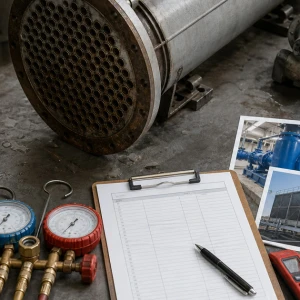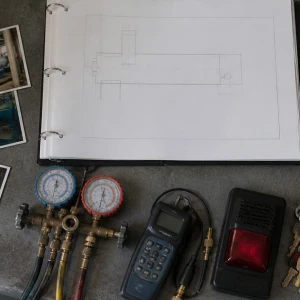


Commercial chiller installation is a coordinated plant project, not an equipment delivery. The chiller must fit verified building load, hydronic distribution, heat rejection, utilities, controls, access, structure, operating continuity, and maintenance needs. ClimateService coordinates authorized Chicago chiller installation scope with the owner, design team, trades, manufacturers, and facility operations from project definition through documented turnover.
Define the building and plant objective
Identify served spaces and processes, occupancy, schedules, present and future loads, ventilation relationships, redundancy, temperature requirements, operating hours, efficiency objectives, maintenance capability, and acceptable outage. New construction, expansion, tenant change, replacement, and plant modernization create different decisions. Responsible design and load work should establish selection requirements where applicable.
Select the chiller architecture for verified conditions
Air-cooled and water-cooled chillers have different heat-rejection, piping, controls, footprint, acoustic, weather, water-treatment, and maintenance implications. Compressor type, refrigerant, staging or turndown, pumping arrangement, temperatures, electrical characteristics, and equipment interfaces must fit the project. A nominal capacity does not establish system compatibility.
Survey access, rigging, and structural paths
Delivery route, doors, corridors, roof or yard access, loading, crane or rigging setup, equipment weight, lifting points, pads, vibration isolation, floor loading, temporary openings, demolition, and restoration require coordination. Qualified rigging and structural parties own their decisions. Equipment dimensions should be checked through the entire path, not only at the final location.
Coordinate chilled-water and condenser-water systems
Pumps, piping, valves, strainers, expansion, air separation, bypasses, drains, vents, insulation, chemical cleaning, flushing, pressure testing, balancing, water treatment, freeze protection, and service isolation affect operation. Flow and temperature requirements should align with the chiller and distribution. Water-cooled installations also coordinate tower and condenser-water ownership without merging those equipment scopes.
Plan air-cooled heat rejection and weather exposure
Air-cooled equipment needs clear airflow, coil access, fan discharge, ambient design conditions, recirculation control, sound consideration, snow or debris management, drainage, wind and structural review, electrical access, and service clearances. Placement should not trade initial convenience for permanent maintenance difficulty or unstable condenser conditions.
Assign electrical and utility responsibilities
Voltage, phase, available capacity, feeders, disconnects, overcurrent protection, starters or drives, control power, grounding, transformers, heaters, pumps, tower equipment, convenience power, and metering may involve several parties. Utility upgrades and shutdowns can control schedule. The approved responsibility map should identify testing and energization authority.
Develop controls and plant sequence before startup
Enable commands, schedules, setpoints, stages, lead-lag logic, pumps, valves, tower commands, resets, flow proof, safeties, alarms, network points, graphics, trends, and operator access must align. Factory controls and building automation interfaces need explicit ownership. Temporary construction sequences should be documented and removed before final acceptance.
Procurement must protect fit and serviceability
Submittals should confirm capacity basis, dimensions, weight, connection locations, voltage, accessories, controls, refrigerant, sound, service clearances, lead time, shipping splits, storage, warranty requirements, and approved substitutions. Equipment release should follow resolved interfaces. A substitute that meets tonnage may still create piping, electrical, rigging, controls, or access conflicts.
Installation quality prepares the plant for startup
Supports, alignment, vibration isolation, piping, electrical, controls, insulation, drains, vents, sensors, strainers, guards, labels, access, cleanliness, and protection should follow approved requirements. Flushing, treatment, pressure tests, flow paths, and supporting equipment must reach prerequisites. Starting a chiller against incomplete plant conditions can invalidate results or damage equipment.
Startup and commissioning create acceptance evidence
Manufacturer startup, rotation, safeties, oil and refrigerant conditions, flows, temperatures, pressures, electrical readings, stages, controls response, balancing, functional tests, punch-list correction, and seasonal verification may involve distinct parties. The record should state what was demonstrated, simulated, deferred, limited, and accepted under available load.
ClimateService supports an operable plant handoff
ClimateService organizes equipment identity, approved documents, startup evidence, controls information, settings, open HVAC items, limitations, warranty materials where applicable, training responsibilities, and maintenance recommendations within its scope. Facility operators should understand isolation, access, alarms, water treatment, seasonal risks, and service planning. A documented baseline supports dependable ownership after construction.
Construction-phase protection preserves equipment condition
New chillers and open piping can be exposed to dust, moisture, freezing, debris, welding contamination, temporary power, incomplete water treatment, or premature operation. Storage, covers, heat, cleanliness, flushing, filter or strainer management, and authorized use should be defined. The party responsible for protection and any cleaning or correction caused by construction exposure should be clear.
Before startup, the team should verify that shipping damage, storage conditions, temporary connections, and construction use have not changed the approved readiness state. Recording these checks protects the manufacturer process and helps the owner distinguish installation findings from later operating issues.
The first scheduled service after turnover can confirm filters or strainers, leakage, fasteners, vibration, operating readings, alarms, controls schedules, and water conditions after the plant has experienced real load. This follow-up should have a defined scope and should not be confused with correction of construction punch-list items or warranty responsibilities assigned elsewhere.