

Commercial chiller replacement and modernization require a plant-level decision. Replacing the machine may leave useful or deficient pumps, towers, distribution, electrical service, controls, and spaces. Modernization can improve selected components but depends on a viable retained asset. ClimateService helps Chicago facilities define evidence and executable HVAC scope without reducing the choice to equipment age or one repair-cost ratio.
Define why the project is being considered
Repeated failures, refrigerant or parts constraints, unstable operation, capacity mismatch, controls obsolescence, energy goals, tenant commitments, facility expansion, maintenance burden, or capital timing may drive action. Identify affected operations, acceptable outage, redundancy, target horizon, and desired outcome. Different drivers support different replacement or modernization paths.
Assess condition and remaining failure risk
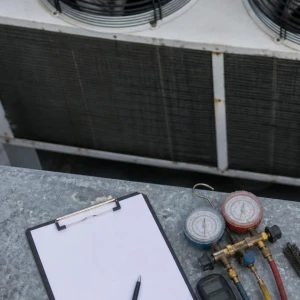
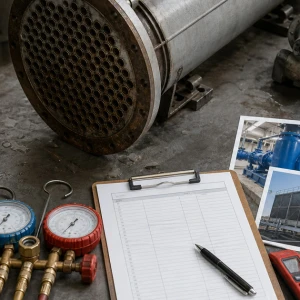
Review compressors, refrigerant circuits, heat exchangers, oil systems, starters or drives, motors, controls, piping interfaces, service history, leaks, corrosion, vibration, parts, access, and supporting equipment. Condition should be based on observed evidence and records. Unknown components and unavailable operating modes remain explicit investigation items.
Verify current and future plant requirements
Load, chilled-water temperatures, schedules, occupancy, ventilation relationships, redundancy, turndown, future projects, heat rejection, electrical capacity, controls, and maintenance capability may have changed. Responsible design should establish selection requirements where applicable. Matching original tonnage does not prove that a new chiller fits current system and building needs.
Define what remains after each option
Replacement may retain pumps, towers, piping, valves, distribution, power, controls, pads, or structures. Modernization may retain compressors, vessels, cabinets, or other major components while changing drives, controls, tubes, heat exchangers, or accessories. Each retained element needs condition, compatibility, serviceability, and expected-horizon review.
Compare refrigerant, parts, and manufacturer support
Refrigerant strategy, leak history, component availability, proprietary controls, firmware, factory support, authorized service, shipping lead times, and warranty terms can affect both options. General market assumptions should be verified for the specific model and project date. A technically repairable or upgradeable asset may still carry difficult recovery risk.
Build complete plant scope for comparison
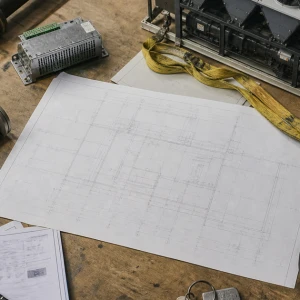
Design, equipment, demolition, rigging, pads, piping, pumps, valves, insulation, electrical, controls, towers, flushing, water treatment, temporary conditions, permits, testing, balancing, commissioning, restoration, and contingency may apply. Comparing equipment price with a component retrofit creates a misleading business decision unless boundaries and retained risks align.
Plan continuity and project phasing
Served areas, critical operations, season, tenant commitments, redundancy, shutdown windows, temporary cooling or pumping, controls coexistence, access, and restoration influence feasibility. Temporary systems are separate scope with capacity, utilities, monitoring, maintenance, and removal. A phased plant strategy should define old-to-new interfaces and final end state.
Modernization needs measurable technical objectives
Controls upgrades, drives, compressor work, heat-exchanger restoration, tube work, refrigerant conversion, sequencing, or plant optimization should address a verified condition. Compatibility, retained life, manufacturer limitations, testing, and future replacement plans matter. Energy or reliability claims require stated baseline, assumptions, operating conditions, and measurement boundaries.
Replacement needs procurement and rigging readiness
Equipment dimensions, shipping splits, weights, lifting points, delivery routes, openings, structural support, lead time, storage, electrical and piping connections, controls, substitutions, and permits should be resolved before release. A nominally equivalent substitute can change the entire project. Decision dates may need to precede the desired field season by many months.
Acceptance must reflect the selected outcome
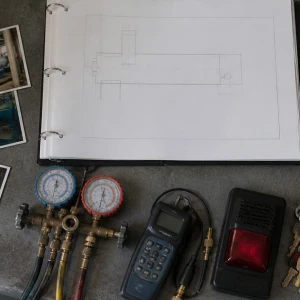
Startup, safeties, flows, temperatures, pressures, electrical readings, stages, controls, balancing, functional testing, punch-list correction, and seasonal deferrals may apply. Modernization testing should connect to its stated objective; replacement testing should confirm complete plant integration. Available-load limits and unresolved supporting-system conditions remain documented.
ClimateService connects the decision to ownership
ClimateService can document chiller observations, retained interfaces, project dependencies, authorized installation work, startup evidence, settings, open HVAC items, limitations, and maintenance recommendations. Facility leadership owns risk and capital approval, while designers and specialists retain their responsibilities. Turnover updates the asset baseline whether the outcome is replacement, modernization, or a monitored bridge plan.
Bridge strategies need explicit limits
A planned repair, rental, temporary chiller, additional monitoring, spare component, or operating restriction may preserve time for design and procurement. The bridge scope should state capacity, served loads, utilities, controls, monitoring, maintenance, weather limitations, expected horizon, failure consequence, and exit trigger. Temporary operation is not evidence that the permanent project is no longer needed.
Decision-makers should schedule a review before the bridge expires or peak conditions return. Updated service evidence, supplier lead times, tenant plans, and capital approvals can then refine the selected path. This keeps a short-term risk decision from drifting into an undocumented long-term plant strategy.
Scenario comparison should preserve rejected options and the reasons they were not selected. A future change in refrigerant supply, parts, energy rates, funding, tenant load, or building plans may make a previously unsuitable alternative relevant. This record allows leadership to update the decision from evidence instead of reconstructing an old discussion.