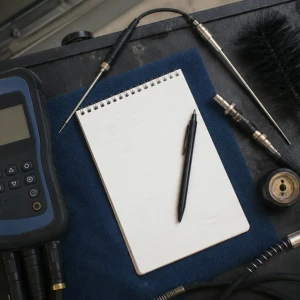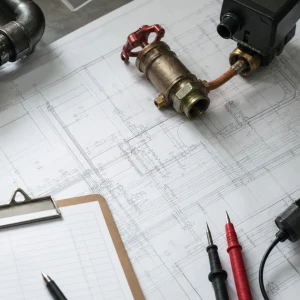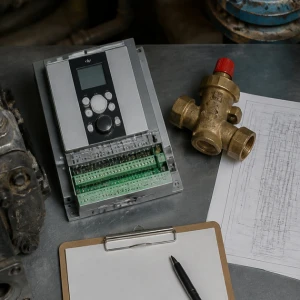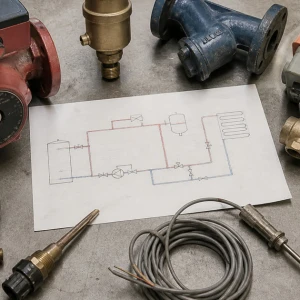


Commercial boiler repair starts with the operating failure, not a guessed component. ClimateService traces authorized Chicago boiler problems through the call for heat, local controls, ignition or heat source, safeties, heat exchange, pumps, water pressure, venting, fuel or power, alarms, and immediate distribution response. Hydronic balancing, BAS programming, maintenance, and capital replacement remain separate when they own the next decision.
Stabilize the boiler room before diagnosis
Active leakage, relief discharge, abnormal odor, overheating, repeated ignition attempts, electrical damage, unusual vibration, standing water, and unsafe access change the first action. The technician confirms shutdown boundaries, protects nearby equipment, coordinates occupants and facility staff, and preserves useful fault evidence. A reset is not treated as a repair when the cause remains unknown.
Capture lockout history and operating context
Controller status, alarm sequence, timestamps, recent resets, weather, load, schedule, fuel or electrical events, water additions, pump changes, maintenance history, and prior symptoms are recorded. Intermittent faults often disappear after cycling power. Capturing history before disturbance helps separate a true boiler failure from an external command, utility interruption, or hydronic condition.
Confirm the complete call-for-heat path
Thermostat or BAS request, enable circuit, limits, safeties, proving devices, pump status, valve position, sequence, and local controller response are compared with the physical plant. The work follows the signal until it stops. BAS ownership begins when supervisory logic or network communication becomes primary, but boiler repair still documents the point where the command failed to produce action.
Evaluate ignition and heat production safely
Where applicable, fuel supply, valves, ignition components, flame safeguard, burner condition, combustion air, venting, draft, condensate, and combustion observations are evaluated within authorized scope and manufacturer procedures. No universal adjustment is assumed. Readings are interpreted with equipment configuration, load, ambient conditions, and verified instruments, then any specialist or utility dependency is named.
Inspect water pressure and circulation
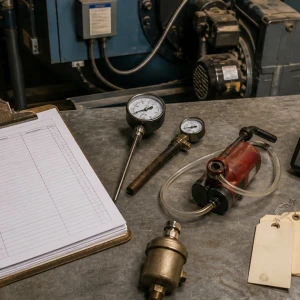
Fill pressure, operating pressure, expansion behavior, air removal, pumps, strainers, check valves, isolation valves, bypasses, visible flow evidence, supply and return temperatures, and makeup activity affect boiler protection. A boiler may trip because the loop cannot carry heat. Loop-wide balancing remains separate, but repair must establish whether circulation is a cause, consequence, or external limit.
Check heat exchangers and immediate piping
Visible leakage, corrosion, scale indicators, temperature stress, fouling signs, gasket condition, vent and drain points, insulation, supports, and accessible connections are reviewed. Conclusions respect inspection limits; concealed internal condition is not invented from one symptom. Findings distinguish repairable external components, manufacturer-level work, water-treatment issues, and replacement-level damage requiring a broader project.
Test sensors, limits, and control components
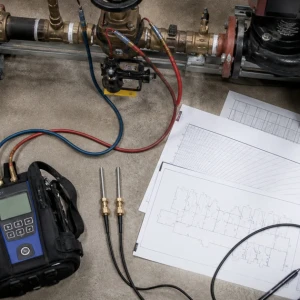
Temperature and pressure sensors, switches, relays, contactors, actuators, wiring, terminals, fuses, transformers, safeties, feedback, and controller inputs are checked against calibrated measurements where practical. Replacing a sensor because its display looks wrong is insufficient. The repair confirms reference value, circuit behavior, commanded state, and actual mechanical response.
Separate boiler faults from plant dependencies
Electrical service, gas supply, combustion air, venting, condensate drainage, pumps, expansion tank, water treatment, BAS commands, common headers, and terminal demand can all stop operation. The report assigns each dependency to an owner. This prevents repeated boiler parts replacement when the recurring fault is a shared pump, blocked strainer, unstable pressure, or external interlock.
Make an evidence-based authorized repair
Work may include accessible ignition, sensor, safety, control, wiring, valve, pump-interface, gasket, drain, vent, or manufacturer-approved components within scope. Parts are matched to model and configuration, and changed settings are recorded. Temporary bypasses are not left as permanent solutions. Conditions outside authorization receive a controlled shutdown or documented next step.
Restart through a deliberate sequence
Restored power and utilities, correct valve lineup, pumps, water pressure, venting, drains, controls, safeties, enable, ignition, staging, supply and return temperatures, alarms, and abnormal sound are observed during restart. Multi-boiler plants require attention to lead-lag behavior and shared conditions. A successful first fire does not prove stable operation under changing load.
Prove heat transfer and representative delivery
Verification can include stable cycles, temperature rise, supply and return behavior, pump response, pressure, safeties, alarm clearing, shutdown, restart, and representative downstream heating. Weather or occupancy may limit full-load proof. The closeout clearly separates a verified boiler repair from hydronic balancing, terminal service, controls work, or monitoring still required.
Receive a repair record built for recurrence prevention
ClimateService documents equipment identity, fault history, safety conditions, call path, ignition or heat source, circulation, sensors, controls, confirmed cause, parts, settings, measurements, restart, representative results, limitations, and open dependencies. Facility teams gain a baseline for the next alarm and an accountable route for maintenance or replacement instead of an unexplained reset.