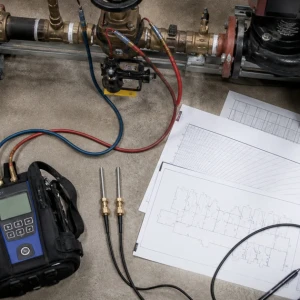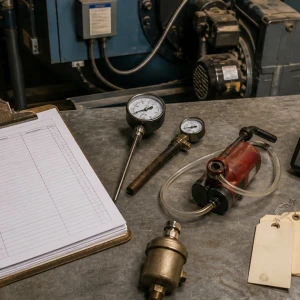


Commercial boiler replacement and upgrade begins after the facility has identified the boiler system as the project owner. ClimateService coordinates authorized Chicago changeovers across existing-condition evidence, selected equipment, hydronic interfaces, utilities, access, demolition, controls, shutdowns, temporary protection, startup, commissioning, and closeout. Broad alternatives, budget cycles, and replace-versus-repair decisions remain under Replacement Planning until approved.
Confirm why the boiler is being replaced
Failure history, leakage, heat-exchanger condition, parts support, unstable combustion, controls obsolescence, operating limits, capacity concerns, maintenance burden, energy records, water-side conditions, and facility plans are reviewed. The project states which problem replacement must solve. A newer boiler alone cannot correct poor loop flow, failed terminal equipment, inaccurate sensors, or a building load that was never verified.
Freeze the approved replacement basis
Equipment selection, load basis, number of modules, redundancy intent, fuel or electrical source, temperature regime, pressure class, pumping arrangement, venting, controls narrative, emissions or permitting responsibilities, schedule, and acceptance criteria are documented. Unresolved engineering is not improvised after demolition. Approved deviations receive an owner and traceable decision before procurement or fabrication changes.
Survey field conditions and hidden dependencies
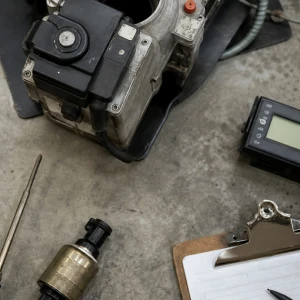
Existing dimensions, weights, foundations, rigging route, structural limits, headers, pumps, expansion, venting, combustion air, fuel, electrical service, drains, controls, asbestos records, shared utilities, adjacent equipment, and service clearances are verified. Old plants often contain undocumented changes. The survey distinguishes reusable infrastructure from items that must be modified, tested, or replaced.
Protect continuity during the changeover
Heating season, freeze exposure, occupied use, critical zones, domestic or process interfaces, isolation reliability, drain-down reach, temporary heat, redundant equipment, outage duration, weather limits, and rollback points shape the sequence. Phased work can reduce risk, but only when shared headers, pumps, power, fuel, venting, and controls allow safe separation. Assumptions are tested before cutover.
Remove equipment without damaging retained systems
Utilities are isolated and verified, fluids managed, controls identified, reusable connections protected, demolition boundaries marked, lifting paths controlled, and adjacent assets covered. Removed equipment, debris, fluids, and recyclable materials follow the project plan. Unexpected corrosion, failed valves, concealed piping, or structural conditions trigger a documented hold point instead of being buried behind new work.
Integrate new boilers with the hydronic plant
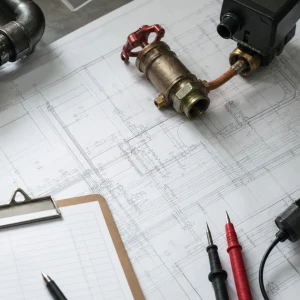
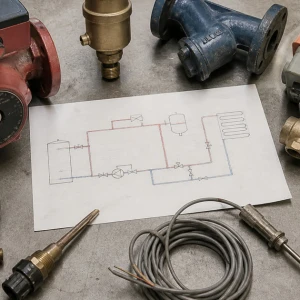
Headers, primary-secondary relationships, pumps, strainers, air and dirt separation, expansion, checks, isolation, balancing, bypasses, drains, vents, relief discharge, sensors, gauges, supports, flushing points, and insulation are coordinated for the new operating range. Reused components are evaluated against required flow, pressure, temperature, control authority, condition, and future maintenance access.
Modernize venting, utilities, and drainage correctly
New boiler technology can change vent materials, condensate volume, neutralization, combustion-air needs, fuel pressure, electrical demand, control power, and drainage. Existing routes are not assumed compatible. The project verifies supports, terminations, slopes, clearances, utility capacity, disconnects, grounding, waste paths, and inspection responsibilities before startup.
Translate old controls into a tested sequence
Enable, staging, lead-lag rotation, reset, pump commands, valve positions, proof, safeties, alarms, emergency shutdown, BAS points, and failure response are mapped from the old plant to the new. Obsolete logic is not copied blindly. Controls/BAS owns supervisory integration, while replacement work proves field devices, local sequence, point behavior, and actual equipment response.
Start and commission under available load
Valve lineup, pressure, expansion, air removal, pumps, utilities, venting, drains, safeties, configuration, enable, heat production, stages, temperatures, alarms, shutdown, and restart are observed. Commissioning adds rotation, transitions, reset, distribution response, and failure modes where authorized. Mild weather or limited load becomes a documented deferred-test condition, not an unqualified acceptance claim.
Compare upgraded performance with the project objective
Stable operation, delivered temperatures, delta-T, pump behavior, cycling, staging, alarms, representative spaces, access, sound, maintenance needs, and operator usability are compared with the approved objective and baseline. Savings are not invented from nameplate efficiency. The review also checks whether retained pumps, valves, sensors, and terminal systems allow the new boiler sequence to work as intended. Trend periods or utility analysis are defined separately when the facility needs measured post-project performance.
Close the project with accountable records
ClimateService assembles equipment data, approved changes, demolition discoveries, test reports, startup forms, settings, valve lineup, controls points, alarm routing, training, warranties, spare parts, maintenance requirements, photographs, open items, owners, and due dates. The turnover identifies retained components and their verified condition, temporary measures removed, final isolation boundaries, normal indications, emergency contacts, seasonal test limits, required trend periods, and the evidence needed to close every deferred item. Operators review access and basic recovery steps before the project team leaves. Facility staff receive an identifiable plant and a clear path into PM, balancing, controls, seasonal operation, or remaining capital work.