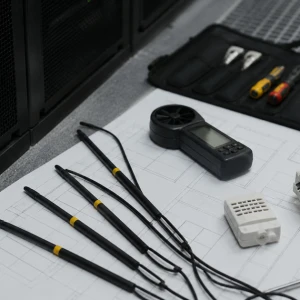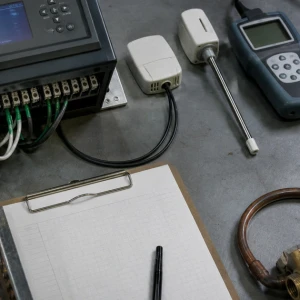


Commercial CRAC and CRAH service owns known equipment-language inside the precision-cooling field. ClimateService supports authorized Chicago computer-room air conditioners and air handlers by tracing filters, fans, coils, direct-expansion or chilled-water dependencies, controls, condensate, alarms, airflow, and protected-space response. The page keeps both families together while distinguishing their utilities; broader data-center operation, BAS integration, and plant service retain separate owners.
Identify the installed unit and configuration
Manufacturer, model, unit role, served area, airflow arrangement, downflow or upflow configuration, direct-expansion circuit, chilled-water coil, condenser or plant connection, humidification, reheat, controls, alarm interface, power source, standby assignment, and access are documented. Acronyms alone do not establish configuration. Field identity prevents a CRAC procedure from being applied to a CRAH dependency or vice versa.
Capture alarm history before resetting
Alarm code, timestamp, active stage, room conditions, recent load or maintenance changes, power events, condenser or chilled-water status, prior resets, remote notifications, and operator actions are recorded. Cycling power may restore operation while erasing cause evidence. Stabilization, temporary measures, and permanent repair are separated so an urgent response does not become an undocumented workaround.
Inspect filters, fans, and cabinet airflow
Filter loading, fit and bypass, fan wheels or blades, motors, drives, speed commands, bearings where serviceable, vibration, sound, rotation, cabinet leakage, supply and return openings, obstructions, and pressure relationships are checked. A controller can show normal fan status while actual airflow is low. Representative room measurements connect cabinet operation with useful delivery.
Evaluate CRAC refrigeration circuits
For direct-expansion CRAC equipment, compressor staging, refrigerant indicators, pressures and temperatures where authorized, metering, evaporator and condenser condition, fans or water-side condenser dependencies, oil observations, safeties, piping, insulation, and alarms are correlated with load. Charge is not guessed from one pressure, and leak or major compressor work follows approved procedures and scope.
Evaluate CRAH chilled-water performance
For CRAH equipment, chilled-water supply and return temperatures, valve command and travel, pressure or flow evidence, coil cleanliness, air bypass, strainers where accessible, plant availability, pump state, insulation, condensation, and controls are reviewed. A healthy air handler cannot cool without usable water conditions. Plant or hydronic faults are routed with evidence.
Check sensors and local control sequence
Temperature and humidity sensors, setpoints, stages, fan speed, valve or compressor commands, humidification, reheat, lead-lag, restart mode, safeties, alarm history, remote contacts, and overrides are compared with physical action. Sensor placement and calibration matter. BAS network, graphics, enterprise alarm routing, and supervisory programming move to Controls/BAS when primary.
Inspect condensate and humidification interfaces
Drain pan, trap, line, pump, float switch, humidifier supply and waste, canister or media condition where applicable, valve leakage, insulation, floor sensor, containment, and termination are reviewed. Water near critical equipment changes work planning. Isolation, spill protection, cleanup, restoration, and monitoring are established before drain or humidification components are opened.
Relate unit output to room airflow
Supply temperature, return temperature, fan speed, floor or overhead distribution, containment, tile or grille placement, bypass, recirculation, rack inlets, obstructions, pressure, and neighboring units determine useful cooling. Servicing the cabinet alone may not correct a hot spot. The report distinguishes equipment output from data-hall distribution and IT airflow dependencies.
Control service around uptime requirements
Active load, maintenance window, available backup, isolation, temporary monitoring, rollback, security, dust, water, tool accountability, communications, approval, restart sequence, and stop conditions shape work. Shared condenser, chilled-water, power, controls, or drain paths are identified before shutdown. An unavailable standby unit becomes an explicit operational risk decision.
Repair the confirmed equipment fault
Authorized work may address filters, fans, motors, drives, sensors, controllers, relays, actuators, chilled-water valves, refrigeration components, condensate, humidification, accessible wiring, insulation, or local settings. Parts match the exact configuration. Supporting plant, major circuit work, network integration, replacement, containment construction, and electrical projects are routed to their accountable owners.
Restart and verify protected-space recovery
Testing can include unit enable, fans, stages, compressors or valves, coil response, supply and return conditions, temperature, humidity, condensate, humidification, alarms, shutdown, restart, lead-lag, authorized standby transition, trend stabilization, and representative room or rack-inlet readings. The active load, duration, access, and untested conditions remain part of acceptance.
Deliver a CRAC/CRAH-specific service record
ClimateService documents exact unit identity, configuration, served space, alarms, filters, fans, DX or chilled-water condition, controls, sensors, condensate, humidification, airflow, dependencies, confirmed cause, parts, settings, change window, tests, recovery, trends, limitations, open owners, and next action. The closeout records active stages, supporting utility state, sensor locations, test duration, standby availability, approved rollback decisions, responsible facility owner, and any protected-room condition that could not be reproduced. Facility teams gain a repeatable equipment baseline without losing the broader critical-room context.