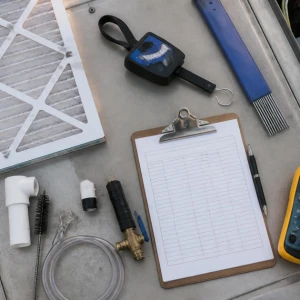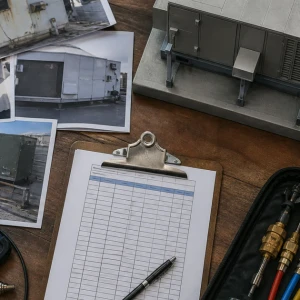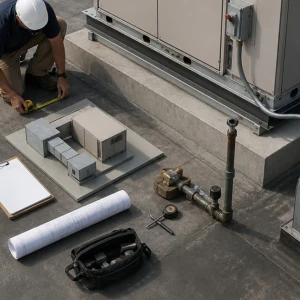


Commercial packaged HVAC repair requires a complete-unit view because cooling, heating, airflow, outdoor air, electrical protection, drainage, and controls share one cabinet and one operating sequence. A unit can run while the building still loses comfort or ventilation. ClimateService diagnoses authorized Chicago equipment from the reported outcome, verifies the dominant cause, and records the repair without treating every symptom as an isolated failed part.
Define the failure where the building experiences it
Identify the unit, served area, schedule, occupancy, weather, load, setpoints, complaint timing, alarms, recent work, and whether the problem affects cooling, heating, airflow, humidity, ventilation, or all modes. A zone complaint can originate in the package, curb or pad, ducts, dampers, sensors, controls, power, or a changed building load.
Capture the operating state before resetting evidence
Commands, stages, temperatures, pressures where authorized, airflow indicators, current, safety status, economizer position, fan operation, drainage, and control history should be observed while the fault is present when safe. Repeatedly cycling power or clearing alarms can erase the sequence that distinguishes a control interruption from a mechanical failure.
Inspect cabinet and environmental exposure
Panels, seals, hinges, fasteners, insulation, partitions, rain paths, snow or ice, corrosion, debris, animal intrusion, base rails, pad or curb, roof flashing where applicable, drainage, and service access affect reliability. Water entering an electrical or blower compartment can create recurring faults even after the damaged component is replaced.
Verify airflow before condemning refrigeration
Filters, return path, supply path, blower wheel, motor, bearings, belts, sheaves, variable drive, coil condition, dampers, doors, duct restrictions, external static pressure, and zone distribution influence temperatures and refrigeration behavior. Low airflow can produce icing, safety trips, poor capacity, high energy use, and compressor stress that resemble a refrigerant problem.
Test the cooling circuit from evidence
Compressor command and operation, contactors, capacitors where used, voltage and current, condenser fans, coil condition, refrigerant temperatures and pressures, metering, piping, safeties, leaks, and load help define cooling scope. Refrigerant work follows applicable handling requirements. Charging without correcting airflow, coil, fan, control, or leak conditions is not a root-cause repair.
Evaluate the installed heating section
Packaged units may use gas, electric, heat-pump, hydronic, or other heating arrangements. Heat exchangers, ignition, safeties, combustion components, heaters, contactors, reversing valves, defrost, valves, pumps, airflow, venting, and controls require equipment-specific procedures. Combustion, fuel, and electrical work must remain within authorized qualifications and safe operating limits.
Separate electrical failure from protective response
Disconnects, fuses, breakers, contactors, relays, terminals, transformers, grounding, phase condition, motor protection, control voltage, safeties, and wiring can interrupt operation. A fuse, overload, or safety may be reacting correctly to a short, failing motor, high pressure, low airflow, or unstable power. Resetting protection without finding the initiating condition increases risk.
Check economizer, ventilation, and controls
Outdoor-air and return dampers, linkages, actuators, sensors, minimum position, mixed-air control, relief, schedules, thermostats, BAS commands, overrides, alarms, and interlocks affect comfort and energy. An economizer stuck open or closed can dominate unit performance. RTU-specific controls stay here; building-wide automation architecture remains a separate owner.
Plan repair around continuity and access
Unit location, roof or grade access, weather, lifts, guards, component weight, adjacent equipment, tenant or process consequence, parts availability, temporary conditioning, and operating windows shape execution. Temporary measures need defined capacity, monitoring, expiration, and response triggers. They should not be presented as a permanent repair.
Correct the cause and connected damage
Replacement components should match electrical, mechanical, refrigerant, airflow, control, environmental, and manufacturer requirements. Mounting, alignment, torque, wiring, tubing support, brazing practices, evacuation where applicable, drainage, seals, insulation, lubrication, and panel restoration influence durability. Connected contributors should be corrected or explicitly assigned.
Test the repaired mode through its sequence
Verification may include command, fan, airflow, stages, cooling or heating response, temperatures, current, pressures, safeties, drainage, economizer, controls, alarms, cycle completion, and representative zones. Weather, occupancy, or load can limit available proof. The handoff should name deferred conditions and what facility staff should monitor.
Watch the repaired unit under the failure window
An intermittent morning trip, afternoon capacity loss, rain-related fault, heating lockout, or occupancy complaint may not reappear during a short service window. The closeout should identify the exact weather, schedule, stage, load, or zone conditions that matter, available BAS or local observations, who reviews them, and what threshold triggers follow-up. This makes monitoring part of the repair rather than an excuse to declare an untested result complete.
ClimateService delivers a repair record that prevents rediscovery
ClimateService documents complaint, operating evidence, confirmed cause, corrected components, settings, measurements, photographs, tested modes, unavailable conditions, open contributors, warranty boundaries, and next maintenance within its scope. Facility teams receive a clear packaged-unit baseline that supports decisions if symptoms return, without unsupported energy, capacity, or remaining-life guarantees.