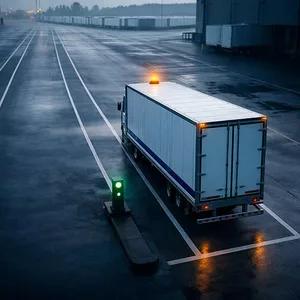
Carrier Vector 8500 and 8700 are single-temp trailer refrigeration units used on 53' refrigerated trailers. We service these Carrier Transicold models for OTR and linehaul fleets running out of Chicago and across Illinois when the unit is not cooling to setpoint, will not restart cleanly, drifts later in the run, or starts shutting down without a pattern the fleet can trust.
Work here stays limited to Vector 8500 and 8700 single-temperature trailer units. Vector multi-temp models, Carrier X4 belt-driven trailer units, alarm-code lookup, reset procedures, PM schedules, and Vector 8100/eCool systems are handled separately.
Carrier Vector 8500 / 8700 Repair for Single-Temp Trailer Fleets
Fleets do not look for this kind of page because they want model history. They look for it when a load is exposed and broad reefer language stops being useful. A unit that cools in the yard and fades later on the highway is one kind of case. A unit that starts once, then refuses to come back after the next stop, is another. A unit that behaves one way on standby and a different way in diesel mode has to be read differently again.
Carrier Vector 8500 and 8700 need their own repair lane because the same complaint can hide very different fault paths on this platform. “Not cooling” is what dispatch hears first. It is not enough to decide what the case really is.
Why Carrier Vector E-Drive Units Follow a Different Repair Track
Carrier describes the Vector platform as an engine driving a generator that powers an all-electric refrigeration system. Carrier also identifies these models through APX controls, generator-centered architecture, and an electric compressor layout. In service, those details change the way the case has to be read.
On belt-driven units, fleets usually think in terms of familiar wear items and visible mechanical symptoms. Vector 8500 and 8700 move the case somewhere else. Generator output, control behavior, electrical stability, standby behavior, and refrigeration response all stay in the frame at the same time. A cooling complaint can sit inside a generator problem. A no-start can have nothing to do with the starter.
Once the unit becomes unstable, generic trailer reefer repair language stops helping. The platform has already narrowed the case.
Common Vector Reefer Problems on Carrier 8500 and 8700 Units
Unit not cooling to setpoint under load
A unit may pull down in easy conditions, then start losing temperature control deeper into the route. Dispatch hears “not cooling.” Operations ends up watching that trailer for the rest of the lane.
Unit will not start or will not restart cleanly
Some cases begin with a no-start. Others are less clean: the unit comes back once, then will not hold stable operation after the next stop. Some cases look recovered after the first restart. The next stop is where the real shape of the problem starts to show.
Intermittent shutdown during normal fleet use
Intermittent shutdown is expensive because fleets often pay for it twice. First on the original event. Then again after the unit goes back out with the same underlying issue still unresolved.
Different behavior in diesel mode and standby
A unit that behaves one way on standby and another way in diesel mode should not be folded into one vague complaint. Both operating states belong in the case before the diagnosis moves forward.
Erratic control behavior or unstable operating response
Sometimes the report sounds messy from the start: odd cycling, unstable response after restart, uneven behavior without a clean pattern. On APX-era Vector equipment, the controls side stays near the center of that case.
How We Set Diagnostic Direction on Carrier Vector 8500 / 8700 Units
We do not start with a generic reefer script. We sort the case into the right direction first: generator-side, electrical, controls, refrigeration performance, or a pattern that appears only after the unit stays under load long enough to expose it.
The same fleet complaint can describe very different service cases. “Not cooling” is the dispatch description. “Won’t start” is the opening symptom. “Shuts down sometimes” is still only a field report. None of those lines tells the whole story by itself.
Correct model identification is part of the repair path, not paperwork on the side. Carrier revised equipment details across model years, and refrigerant type is not something to confirm from memory. The actual unit label is where the case starts.
What Carrier Vector 8500 / 8700 Repair Is Meant to Restore
The target is simple to describe even if it takes work to get there: the load moves, the temperature stays where it should, and the trailer stops behaving like the next failure is waiting around the corner.
Not a restart by itself. Not a temporary pull-down in easy conditions. On Carrier Vector 8500 and 8700 units, repair means stable operation, lower comeback risk, and a trailer that can go back into normal use instead of staying in the gray zone between “running” and “trusted.”
For Chicago and across-Illinois operations, that difference shows up fast. A reefer that still needs constant attention is not really back in service.
Mobile Stabilization and Shop Repair Serve Different Jobs
Some cases can be stabilized in the field so the load is protected and the next move becomes controlled. Other cases need shop repair because the unit requires more than a roadside restart and more than a quick decision made under trip pressure.
That split gets sharper when the complaint points toward generator behavior, electrical instability, control-side irregularity, or repeat-comeback history. Mobile work protects the immediate trip. Shop repair is where the case gets enough structure to support a release decision the fleet can live with afterward.
Those are not the same job.
Verification Before Release Matters on Vector Single-Temp Units
Carrier’s platform language supports a stricter release standard on Vector equipment. The architecture is all-electric, and Carrier also describes component-on-demand behavior within that system. In service terms, release has to reflect stable operating behavior, not just the fact that the unit came back on line once.
This matters most after intermittent shutdown, unstable response, split behavior between standby and diesel mode, or a cooling complaint that only showed up later in the route. A quick pass in the wrong conditions can send the same trailer back out with the same risk still attached to it.
A weak release standard turns the next trip into the test. Better verification keeps that from happening.
Carrier Vector 8500 and 8700 Belong Together, but the Case Is Still Unit-Specific
These models fit on one single-temp service page because the platform logic is close enough to support one repair conversation. Both sit in the same E-Drive context, the same generator-centered service world, and the same APX control environment.
They are not interchangeable in a live case. Carrier documentation separates the engine package, and the 8700 also carries a DataLink data recorder in its standard feature set. That difference does not require two separate pages, but it does matter when the unit in front of us has to be scoped correctly.
What Is Not Included in This Service
- Vector multi-temperature units such as 8600MT, 8611MT, 8800MT, and 8811MT
- Carrier X4 belt-driven trailer units
- Alarm code lookup, reset sequences, and code-by-code troubleshooting
- Preventive maintenance schedules, PM A / PM B planning, and maintenance-program detail
- Vector 8100 / eCool all-electric systems
- Truck refrigeration units, van units, and trailer body repair
Carrier Vector 8500 / 8700 Service in Chicago and Across Illinois
Wrong assumptions at the front of the case come back later as repeat downtime, unstable temperature control, another no-start, or another shutdown event described in different words by the next driver or dispatcher. Single-temp Vector repair stays narrow because the service consequences are narrow too.
We service Carrier Vector 8500 and 8700 units for OTR and linehaul fleets with that operating reality in mind. The case starts with the actual unit, the actual complaint, and the actual direction the platform is pointing toward. From there, the work is about restoring dependable operation and returning the trailer to normal fleet use in Chicago and across Illinois.
If your Carrier Vector 8500 or 8700 is showing any of these patterns, contact us to request single-temp trailer reefer repair service built around the platform — not a generic reefer script.