Heating & Cooling Chicagoland

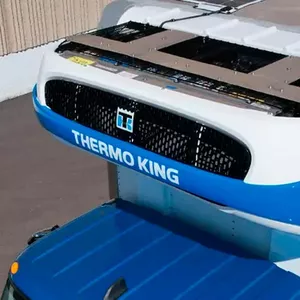
Thermo King Precedent S-Series Repair & Diagnostics

Chicago-based Thermo King Precedent S-600/S-700 repair and SR-4 diagnostics for 53’ refrigerated trailers, with mobile service across Illinois corridors and planned support for multi-state fleets.

carrier daiken goodman lennox trane york luxaire american standard onlinepngtools

Precedent S-Series Support for Modern Refrigerated Fleets

Thermo King Precedent S-Series units—most commonly the S-600 and S-700—are a standard choice for fleets running 53-foot refrigerated trailers across regional and long-haul lanes. These units are built around modern controls and onboard data, which means accurate diagnostics matter as much as the repair itself. Our team provides dedicated Precedent S-Series repair and diagnostic service for carriers that need stable temperature performance and predictable equipment uptime.

Chicago is our primary service hub. We support fleet operations throughout the metro area, nearby suburbs, and the main Illinois freight corridors that feed local distribution, intermodal freight, and Midwest routing. For multi-state carriers, we can also arrange out-of-area service support when a fleet needs consistent Thermo King Precedent coverage across multiple locations. This is handled as planned fleet support, not a one-off promise.

Service is delivered through two formats: mobile on-site work for operational needs and in-shop service for repairs that require controlled conditions and deeper verification. Fleets can use either format depending on how the trailer is scheduled and where the unit is positioned. The goal is straightforward: accurate diagnostics, clear repair decisions, and reliable performance from the S-Series platform—without disrupting the fleet’s operating cycle.

What Sets Thermo King Precedent S-600 and S-700 Apart

Precedent S-Series trailer units are not serviced the same way as older platforms. The S-600 and S-700 are built around tighter electronic control, deeper onboard monitoring, and operating logic designed for modern fleet use. That changes how troubleshooting is approached: a Thermo King Precedent repair should start with a clear understanding of what the controller recorded and how the unit behaved over time, not just what it looks like at the moment of inspection.

For fleets, the value of S-Series equipment is tied to consistency and visibility. These units support SR-4 diagnostics and built-in data logging that helps technicians track alarms, operating trends, and performance patterns across real routes and warehouse cycles. When telematics is enabled, service decisions can be based on documented behavior rather than guesswork—especially important for multi-trailer operations that need repeatable outcomes.

Key characteristics that define Precedent S-Series service work include:

  • SR-4 controller architecture that supports structured diagnostics and configuration checks during Thermo King troubleshooting.
  • Onboard data logging used to review temperature behavior, alarm history, and operating patterns as part of Thermo King Precedent diagnostics.
  • Telematics-ready fleet visibility that helps maintenance teams and dispatch align repair decisions with real-world operating conditions.
  • Platform-specific service approach for the S-600 and S-700, where electrical integrity, airflow performance, and refrigeration operation are evaluated as one system.

This is why our Precedent S-Series repair process is built around documented diagnostics first, then targeted corrective work—either as mobile Thermo King repair support around Chicago and Illinois corridors or as in-shop service when the unit needs controlled testing and full verification.

Real-World Performance Issues in S-Series Trailer Units

On a Precedent S-600 or S-700, most service calls start with a performance change rather than a hard failure. Fleet staff usually notice it first in operating behavior: the unit still runs, but it no longer performs the same way on the same lanes, at the same docks, or under the same load profiles. This section outlines the most common S-Series issues we see in the field and how they typically present on 53-foot refrigerated trailers.

Temperature Instability Under Load

A frequent complaint is that the reefer is not maintaining setpoint under normal freight conditions. Drivers may report temperature fluctuations, slow recovery after door openings, or inconsistent control during warehouse staging. In many cases, the unit is technically “cooling,” but the system is no longer holding temperature with the same stability across the trailer’s operating cycle.

Unit Not Starting or Cycling Irregularly

Another common pattern is intermittent starting or cycling that does not match typical run behavior. Dispatch may see repeated start attempts, unexpected stops, or an operating mode that seems to change without a clear reason. For Thermo King troubleshooting on S-Series platforms, this is treated as a systems issue—electrical integrity, control signals, and engine-side stability are evaluated together rather than replacing parts based on a single symptom.

Airflow and Heat-Exchange Efficiency Loss

When airflow or heat exchange begins to degrade, fleets often describe it as reduced capacity or “weak performance.” You may see longer pull-down times, uneven temperature behavior during heavy loads, or slower stabilization after routine dock cycles. On Precedent units, airflow performance is a core part of Thermo King Precedent diagnostics because it influences how the controller responds and how efficiently the refrigeration system maintains temperature.

Electrical and Control-Related Anomalies

S-Series units rely on stable power delivery and clean control signals. When electrical consistency declines—through grounds, wiring, or charging performance—the symptoms can look unrelated at first: intermittent alarms, irregular cycling, or sensor readings that do not match real conditions. That’s why Thermo King diagnostics for the S-600 and S-700 always include electrical integrity checks before deeper refrigeration conclusions are made.

These issues do not automatically point to one failed component. The goal of service is to identify what changed and why, then restore predictable operation using a documented diagnostic path—whether the trailer is scheduled for mobile repair support or routed into the shop for deeper verification.

Diagnostic Workflow for Precedent S-Series Trailer Reefers

Effective Thermo King Precedent diagnostics on the S-Series start with structure. The S-600 and S-700 are designed to record operating behavior through the controller and, when enabled, through telematics. That information becomes the baseline for troubleshooting. Instead of chasing one symptom, we verify how the unit operated across recent dock cycles, pull-down events, and steady-state runs, then confirm which system is driving the performance change.

Our S-Series diagnostic workflow follows a consistent sequence so repair decisions are based on verified data:

  • Electrical integrity check — confirm battery condition, charging performance, grounds, and power stability so controller readings are trustworthy.
  • SR-4 review — capture alarms, operating history, and logged performance patterns to understand what the unit recorded under real load conditions.
  • Refrigeration performance evaluation — assess pressure/temperature behavior, heat-exchange performance, and how quickly the unit recovers after normal operating events.
  • Airflow verification — confirm condenser and evaporator airflow is consistent, since airflow issues can look like refrigeration problems and distort temperature control.
  • Targeted corrective testing — after a fix, verify the unit returns to stable operation and that the controller response matches expected S-Series behavior.

This process supports both mobile Thermo King repair calls around Chicago and scheduled in-shop trailer refrigeration repair when deeper verification is required. For fleets running regional and interstate lanes, the goal is simple: documented troubleshooting, clear repair justification, and a Precedent unit that returns to predictable temperature control on the next dispatch.

Mobile S-Series Repair Across Chicago and Illinois Highways

For fleets running Thermo King Precedent S-Series units, mobile service is often the most practical way to keep equipment on schedule. Instead of pulling a loaded 53-foot reefer out of rotation, technicians can meet the trailer where it is already staged—at a distribution center, a fleet yard, an intermodal facility, or a truck stop—then complete diagnostics and corrective work without disrupting the route plan.

Our mobile coverage is built around the freight patterns that move through the Chicago market and across Illinois. That includes core corridors such as I-55, I-90, I-94, I-80, I-294, and I-355, along with the suburban terminals and cold-chain facilities that support regional and interstate operations. For dispatch, the objective is simple: restore stable S-Series performance with documented Thermo King diagnostics and a clear repair decision—mobile when practical, shop-based when deeper verification is the better option.

Mobile Precedent service typically supports:

  • On-site Thermo King diagnostics for S-600 and S-700 units using SR-4 data review and system checks.
  • Operational corrections that address performance changes without requiring controlled shop testing.
  • Targeted component service when access and conditions allow safe, efficient work on the trailer.
  • Fleet coordination for terminals and distribution sites where multiple trailers need the same service window.

Chicago remains the primary service hub, but multi-state carriers can also request planned out-of-area support when they need consistent Thermo King Precedent coverage across several locations. Those deployments are handled as scheduled fleet service, aligned with operating hours, trailer positioning, and the customer’s maintenance workflow.

In-Shop Repair and Overhaul for Precedent S-600 and S-700

Mobile service works well when a Precedent unit can be corrected and verified under normal operating conditions. When a repair requires controlled testing, deeper troubleshooting, or work that is best done with dedicated equipment, in-shop service becomes the cleaner and more reliable option. This is common for issues that involve extended diagnostic time, refrigeration-system work that needs full recovery procedures, or electrical problems that require methodical tracing.

In our Chicago-based reefer shop, technicians can isolate variables that are difficult to control in the field. The unit can be evaluated without dock congestion, limited access, or time pressure from a live load schedule. That environment supports repairs that need structured verification before the trailer returns to fleet rotation.

Shop-based Thermo King Precedent repair for S-Series units is typically used for:

  • Deeper diagnostics when the SR-4 history suggests an intermittent pattern that needs controlled replication and confirmation.
  • Refrigeration system service that requires full recovery procedures, leak tracing, and recharge by weight per OEM specifications.
  • Electrical tracing and harness work where intermittent power or signal issues must be tracked circuit-by-circuit.
  • Component replacement and verification when the fleet needs documented performance confirmation before dispatching the trailer on a long route.

For fleets, the advantage is predictability. Shop work allows repairs to be completed, verified, and documented in one cycle, so the S-600 or S-700 returns to service with stable temperature control and a clear service record for maintenance tracking.

Component-Level Services for Thermo King Precedent Units

Once diagnostics identify which system is driving the performance change, Precedent S-Series repair becomes a component-level job. The goal is not to “throw parts” at a unit, but to correct the specific failure point and restore predictable operation across the full operating cycle. Because S-600 and S-700 trailer units combine electronic control with mechanical refrigeration, we group service work by system to keep repairs consistent and repeatable for fleet maintenance teams.

Our Thermo King Precedent service capabilities for S-Series units typically include:

  • Refrigeration circuit service — leak detection, sealing and component replacement as needed, proper recovery procedures, and recharge by weight per OEM specifications.
  • Compressor-related repair — operational evaluation, mounting and drive inspection, and compressor service or replacement when diagnostics confirm internal performance loss.
  • Airflow and heat-exchange corrections — inspection and correction of condenser and evaporator airflow conditions that affect pull-down performance and temperature stability.
  • Electrical diagnostics and repair — charging system checks, grounds and power delivery verification, wiring and harness inspection, connector cleanup and repair, and control-circuit troubleshooting.
  • Clutch and belt system service — inspection and corrective work on drive components that affect engagement, load response, and consistent unit operation.
  • SR-4 and telematics support — controller review, configuration validation, and documentation aligned with fleet reporting workflows when data logging and monitoring are in use.

This structure helps fleets manage Thermo King troubleshooting with clear repair logic: identify the system, correct the root cause, and verify that the S-Series unit returns to stable performance. Whether the work is completed through mobile Thermo King repair support or routed into the shop, the outcome is the same—reliable operation that holds up across regional routes and interstate dispatch.

Preventive Maintenance Programs for S-Series Fleets

Precedent S-Series units usually don’t “fail out of nowhere.” Most major repair events start as small changes that get ignored—longer pull-down, noisier operation, a unit that cycles differently at the same dock, or a trailer that suddenly needs more run time to stay stable. A preventive maintenance program for S-600 and S-700 fleets is designed to catch those shifts early and keep units consistent across the fleet, not just “serviced.”

We build S-Series PM around two realities fleets actually operate with: hour-based OEM guidance and the fleet’s duty cycle (long-haul continuous runs vs. regional multi-stop work). That means the same checklist does not get blindly applied to every trailer. PM is scheduled and documented so maintenance managers can track repeat patterns, align trailer availability, and avoid stacking emergency repairs during peak shipping periods.

A practical Precedent S-Series PM visit typically includes:

  • Fuel and engine-side checks — filter condition, restriction indicators, belt and drive inspection, leak survey, and general run-quality review.
  • Electrical stability — batteries, charging performance, grounds, harness condition, and connector integrity that can affect controller behavior and starts.
  • Airflow and heat exchange — condenser/evaporator cleanliness and airflow path inspection, because restricted airflow is a common cause of slow pull-down and unstable control.
  • Refrigeration system inspection — leak indicators, hose and fitting condition, and operational checks that confirm the system is performing normally under load.
  • SR-4 review and documentation — capture operating history and alarms, confirm configuration basics, and document performance observations for fleet records.

For fleet managers, the value is consistency. PM isn’t just “changing filters”—it’s keeping the S-Series platform operating the same way across multiple trailers, so drivers stop reporting different behavior from unit to unit. For multi-state carriers, PM can also be organized as coordinated service blocks when groups of trailers are staged at a terminal or distribution site.

Support Models for Regional, Long-Haul and Multi-State Fleets

Fleets don’t all use refrigerated trailers the same way. A regional carrier may cycle trailers through the same distribution centers every day, while an OTR operation may have the same S-600 or S-700 running week after week with long gaps between planned stops. We structure Thermo King Precedent S-Series support around how the fleet actually dispatches equipment, so service is predictable and easy to manage across terminals, lanes, and seasons.

Chicago remains the primary hub for shop work and coordinated scheduling. For carriers moving freight through Illinois, that makes it straightforward to route a trailer for in-shop Precedent repair when deeper verification is needed. At the same time, fleets operating across multiple states often need consistent support beyond a single metro area. For those customers, service can be organized as planned fleet coverage—scheduled technician deployment to a terminal, yard, or customer facility where multiple Precedent units are staged. This is especially useful for multi-unit diagnostics, seasonal readiness checks, and maintenance blocks timed around high-volume shipping windows.

To keep fleet operations predictable, service coordination typically includes:

  • Scheduled multi-trailer service blocks aligned with how equipment is staged at a DC, yard, or terminal—reducing repeated dispatch interruptions.
  • Standardized documentation for S-Series diagnostics and repair outcomes, so maintenance managers can track recurring patterns across the fleet.
  • Mobile support for positioned equipment when a trailer is already staged and needs Precedent troubleshooting before the next dispatch.
  • Planned out-of-area coverage for carriers with multi-state routes that need consistent Thermo King service support outside Illinois.

The result is a service model that fits how fleets run refrigerated freight in the U.S.—shop-based capability anchored in Chicago, combined with mobile and scheduled fleet support that keeps Precedent S-Series units ready for regional routes and interstate dispatch.

Why Fleets Trust Our Precedent S-Series Specialists

Fleet managers don’t judge a Thermo King service provider by how fast a tech can show up—they judge by whether the same Precedent S-Series unit runs predictably after the repair, and whether the service record is clear enough to manage across multiple trailers. That’s why our S-600 and S-700 work is built around documented diagnostics, repeatable repair decisions, and communication that fits how U.S. fleet maintenance is actually managed.

We treat Thermo King Precedent repair as a controlled process: capture what the SR-4 controller and operating history show, confirm electrical and refrigeration performance with system checks, then correct the cause that drives the behavior change. This prevents the “temporary fix” cycle where a trailer returns to service and the same issue comes back on the next dispatch. For fleets, that consistency matters more than a one-time quick win.

Fleets typically choose us for S-Series diagnostics and repair because we provide:

  • Platform-specific focus on Precedent S-Series units, including S-600 and S-700 trailer reefers used in long-haul and regional freight.
  • Clear documentation that maintenance teams can use—what was found, what was corrected, and what was verified before the unit returned to rotation.
  • Mobile and shop service in one system, so fleets can route equipment based on scheduling needs instead of service limitations.
  • Fleet-friendly coordination for multi-trailer work, staged equipment, and planned service blocks—especially when a carrier needs consistent support across more than one location.

Chicago remains the anchor for shop-based verification and coordinated scheduling, but the service model is built for modern fleet operations that move equipment across state lines. Whether a carrier needs mobile Thermo King repair support, in-shop Precedent troubleshooting, or a structured program for multiple trailers, the priority stays the same: stable temperature performance and predictable uptime from the S-Series platform.

Request Thermo King Precedent S-Series Service

If your Precedent S-600 or S-700 is showing unstable temperature control, inconsistent cycling, or performance that no longer matches how the unit normally runs, the next step is structured diagnostics—not guesswork. Our team provides Thermo King Precedent S-Series repair and diagnostic service with two clear paths: mobile support for positioned trailers and in-shop service in Chicago for repairs that require deeper verification.

Chicago is the primary service hub for scheduling and shop work, supporting carriers across the metro area, nearby suburbs, and the main Illinois freight corridors. For fleets operating beyond Illinois, planned support can be arranged for multi-state operations when a carrier needs consistent service coverage across multiple terminals or facilities. That support is coordinated as fleet service, aligned with trailer staging and operating schedules.

To request service, contact dispatch and provide the trailer location, unit identification, and a brief description of the performance change you’re seeing. From there, we’ll confirm the best service format—mobile Thermo King repair for on-site diagnostics and corrective work, or shop-based Precedent service for controlled testing and full verification—so the trailer can return to rotation with predictable S-Series performance.

Chicago S-Series Performance Optimization

Our technicians log suction/discharge curves and ambient heat load during live runs on I-55 and I-294, then adjust SR-4 cycle timing to keep Precedent trailers within a tight ±1 °F band—even in lake-effect humidity. Seasonal valve and fan-speed tweaks cut compressor runtime by up to 9 % without touching cargo temperature.

SR-4 Deep-Trace Diagnostics

Service vans carry protocol analyzers that record high-speed CAN traffic inside the SR-4 network. By isolating millivolt drift on sensor lines and packet time-outs from failing alternators, we locate faults before they trigger capacity alarms—transforming emergency calls into scheduled PM events.

R-452A Pressure/Temperature Fine-Tuning

Precedent units shipped for nationwide service often arrive in Chicago overcharged for cooler coastal climates. We recalibrate charge weight to local barometric baselines, reset superheat, and balance hot-gas duty cycles. The result: faster pull-down, shorter defrosts, and documented fuel savings on stop-and-go routes.

DOT & CARB Evergreen Compliance Reporting

Every repair closes with a digital certificate that lists refrigerant weight, ripple voltage, compression ratio, and firmware level. The report syncs to fleet portals, satisfies DOT inspectors, and preserves CARB Evergreen status—eliminating paperwork headaches during random roadside checks.

Thermo King Precedent S-Series Repair & Diagnostics FAQ

Q: What details should dispatch send to start S-Series diagnostics quickly?
A: Provide the trailer number, exact location, whether the unit is running or shut down, any active alarms, and a short description of the performance change (for example: slow pull-down, unstable temperature, irregular cycling). If telematics is available, include the most recent trend snapshot or alarm history so the technician can arrive prepared.

Q: Can you diagnose a Precedent S-600 or S-700 without replacing parts “just to try”?
A: Yes. Our workflow is diagnostics-first: we review SR-4 operating history, confirm electrical stability, then evaluate refrigeration performance and airflow before recommending repairs. Parts are replaced only when tests and observations support the decision.

Q: When should a fleet choose shop service instead of mobile repair for an S-Series unit?
A: Shop service is the better choice when the issue requires controlled testing, full refrigerant recovery procedures, complex electrical tracing, or verification that can’t be done reliably in a yard or on-site environment. Mobile service is ideal for on-site diagnostics and corrective work when conditions allow safe access and testing.

Q: Can you service an S-Series unit while the trailer is loaded at a warehouse dock?
A: Often, yes. Many diagnostics and operational checks can be performed with the trailer loaded as long as the unit is accessible and the dock setup doesn’t restrict airflow or technician access. If the repair requires controlled testing or extended system work, shop service may be recommended.

Q: What does “SR-4 diagnostics” mean in practical terms for fleets?
A: It means using the controller’s stored operating history—alarms, temperature behavior, and system responses—to identify patterns and confirm what changed over time. This helps avoid guesswork and supports consistent repair decisions across multiple S-Series trailers.

Q: Do you work with telematics data for multi-state fleets?
A: Yes. When telematics is enabled, we can use available operating history to support troubleshooting decisions and help fleet maintenance teams standardize how issues are documented and resolved across terminals and regions.

Q: Do you handle refrigerant work on Precedent S-Series units safely and legally?
A: Yes. Refrigerant service is performed using proper recovery procedures and recharge by weight according to OEM specifications. This protects the system, supports reliable performance, and ensures compliance with standard environmental handling requirements.

Q: What early warning signs suggest an S-600 or S-700 needs service soon?
A: Common early indicators include longer pull-down time than usual, small but repeated temperature swings, cycling behavior that changes at the same dock routine, or fuel usage increasing without an operational reason. These are often easier to correct before they escalate into a full service interruption.

Q: Can you support preventive maintenance programs for fleets running multiple S-Series trailers?
A: Yes. PM can be scheduled as multi-trailer service blocks and documented in a fleet-friendly format. The program is aligned with OEM guidance and adjusted to your duty cycle (regional multi-stop vs. long-haul continuous operation).

Q: Do you provide documentation that fleet maintenance teams can use internally?
A: Yes. We document what was observed during diagnostics, what was corrected, and what was verified before returning the unit to service. This helps maintenance managers track recurring patterns and maintain consistent standards across the fleet.

Call us: (312) 680 4033