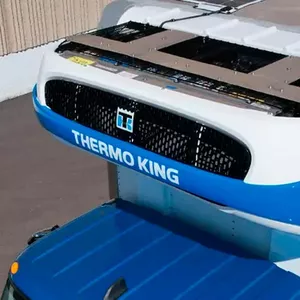
Ustarshah Inc. provides Thermo King SL-series reefer repair, maintenance, and installation support for refrigerated fleets operating in Chicago, Chicagoland suburbs, and across Illinois. We work on single-temp trailer refrigeration units that must keep product safe on real routes, not just look fine during a quick yard check. When an SL-series unit won't cool, won't pull down, drifts after reaching setpoint, or keeps coming back with the same warning pattern, we scope the job around the operating conditions that trigger the failure and we sign the unit off only after stability is confirmed under that same duty profile.
We support trailer refrigeration repair in Chicago and across Illinois for SL-300, SL-400, and SL-400e fleets that run mixed lanes. Service demand for SL-series units clusters where freight turns fast and yard dwell is heavy. In Northern Illinois that is the I-55, I-80, I-90, and I-94 corridors and the distribution belt around Joliet, Romeoville, Bolingbrook, Bedford Park, Elk Grove Village, Schaumburg, Addison, and nearby yards. That geography matters because the same unit can behave one way on short stop-start dock cycles and another way after an hour at steady run on the highway. We build the plan around your lane reality.
What fleet-level SL-series service means
For SL-series fleets, a completed repair is measured by predictable temperature control at fleet setpoints through the same duty conditions that produced the original failure, with a service record your team can use for preventive planning. That standard cuts down on recurring shop visits, protects product, and stops the cycle of quick fixes that do not hold up on the next dispatch.
Most SL-series complaints fall into three buckets. The unit cannot reach setpoint. The unit reaches setpoint but later drifts. The unit behaves unpredictably through intermittent events that never show up in a short check.
Different problems. Different plans.
SL-300 vs SL-400 vs SL-400e differences that change repair planning
Model identification is the quickest way to avoid wasted time. SL-300, SL-400, and SL-400e are related platforms, but unit configuration and controller generation change how symptoms are interpreted, how parts are sourced, and what the release criteria should look like.
| Model | Key platform identifiers | Fleet-relevant capability notes | Service impact |
|---|---|---|---|
| SL-300 | Base SL-series single-temp platform, controller generation and unit configuration confirmed at intake | Common in mixed lane operations where Cycle-Sentry and Continuous Run usage varies by yard procedure | We focus on pull-down performance, stability after pull-down, and the underlying reason a unit keeps coming back for the same thing |
| SL-400 | SL-series single-temp platform with cold-weather relevant configuration | Electric heater strips are standard equipment on SL-400 in OEM documentation | Winter complaints are scoped around stability during ambient swings and runtime transitions, not just basic cooling output |
| SL-400e | OEM materials reference TK486V engine and X430RL compressor family markers | Published platform markers help confirm configuration and parts sourcing early | We lock model and configuration before deeper work to avoid mismatches and prevent comeback issues |
Setpoint range and controller configuration
When an SL-series reefer is not holding temperature, the first technical question is whether the complaint is being evaluated against the right setpoint band and the operating mode the fleet uses. OEM technical literature describes a standard setpoint range of −29 °C to +27 °C and a programmable range of −32 °C to +32 °C depending on controller configuration. What this means on the road is simple. Stable performance must be proven in the setpoint band your loads run at, in the mode your drivers actually use.
Thermo King SL-series repair, maintenance, and installation coverage for fleets
Ustarshah Inc. delivers SL-series service as a fleet operation, with scope centered on uptime and product protection. We repair and maintain the systems that directly affect temperature control and reliability, and we document outcomes so fleet maintenance and dispatch can plan the next move.
- Cooling performance complaints including slow pull-down, drift after pull-down, and unstable temperature control under load
- Intermittent faults and repeat events that do not reproduce in a short yard check
- Electrical and controls diagnostics focused on integrity, configuration correctness, and sensor plausibility where relevant
- Refrigeration circuit integrity decisions and component replacement planning aligned to reliability outcomes
- Airflow and heat-load related performance issues that show up on specific routes and ambient conditions
- Standby-related stability issues when yard procedures depend on consistent dwell operation
- Preventive maintenance planning aligned to utilization and seasonal stress across Illinois operations
Mobile and emergency SL-series service in the Chicago area
When an SL-series unit goes down mid-route, fleets often need mobile reefer repair in Chicago to keep a load moving. We prioritize fast scoping and a clear decision point: restore stable cooling on the lane or set a controlled plan for transfer and follow-up repair. Emergency reefer repair in Chicago is treated the same way. The goal is to protect product first, then get the trailer back into a predictable operating state with a documented sign-off.
Common SL-series fleet problems and how we scope them
Fleet managers and dispatch teams search using symptom language. The sections below use the same phrasing because it maps directly to the intake questions that shorten downtime.
Reefer not cooling or not reaching setpoint
When an SL-series reefer is not cooling or not reaching setpoint, the root cause usually falls into slow pull-down, drift after pull-down, or recovery failure after door events. Each pattern has a different diagnostic path. Intake captures setpoint targets, Cycle-Sentry versus Continuous Run usage, ambient conditions, and door history so the plan matches the failure you actually have.
We also hear it phrased a different way. Trailer refrigeration not cold means the unit is running but the load is still warming. Treat it as a pull-down and stability problem, then scope it to the duty cycle and operating mode that made it show up.
We see this a lot on runs out of the Bedford Park yards. A unit clears a dock cycle fine, then drops a few degrees after forty-five minutes steady on I-55. By the time the driver notices, the load is already at risk.
Reefer unit will not pull down
A unit that will not pull down is a performance problem with a measurable finish line. We scope work around the cargo profile, ambient stress, lane length, and operating mode. That keeps the plan realistic and prevents a release that only holds up in light conditions.
That is where most generic repairs fail.
Temperature swings and unstable control
Temperature swings are a common reason fleets lose confidence in a unit even after a shop visit. Many stability complaints involve runtime transitions, cycling behavior, configuration, and sensor signal integrity. The service target is stable control through the duty conditions that originally triggered the complaint.
That pattern burns driver trust fast.
Recurring warnings, shutdown behavior, and repeat events
Intermittent warnings and shutdown behavior are expensive because they are easy to clear without removing the cause. We capture the failure context, reproduce the pattern under controlled conditions, then confirm it is resolved using release checks that match fleet use. This page does not publish code lists or step-by-step actions. It is written to explain service delivery and sign-off discipline.
Another scenario we see is a unit that runs fine for a driver on one route, then starts acting up when the trailer is reassigned to a lane with longer steady runtime. Lane-specific failures need a different validation approach than issues that show up every shift.
Standby related instability during yard dwell
Standby behavior matters when your yard procedures rely on dwell operation for staging and scheduling. A unit that behaves differently on standby than it does on road operation needs a plan that includes standby conditions during diagnostics and sign-off.
The unit looks fine. Until it does not.
How our SL-series service process works for Chicago and Illinois fleets
Fleet uptime improves when service follows a workflow your team can rely on. The structure below is meant to reduce wasted time and prevent repeat visits.
Step 1 Intake that identifies the unit and the failure pattern
We confirm model identification as SL-300, SL-400, or SL-400e and capture unit configuration details that affect planning. We document the complaint in symptom language and capture operating context including setpoint targets, Cycle-Sentry versus Continuous Run usage, standby usage, ambient conditions, and recent changes in service history or route assignment.
Step 2 Triage that matches the pattern
We triage by failure pattern rather than by guessing parts. A unit that fails only after sustained runtime is handled differently than a unit that fails immediately. Lane-specific failures get a different validation approach than issues that show up every shift. This keeps the work aligned with how the fleet uses the equipment.
Step 3 Repair planning with clear release criteria
We define scope for the current visit, set clear release conditions, and flag anything that should go into the next PM window when applicable. This prevents vague outcomes and cuts down on comeback issues.
Step 4 Sign-off checks that reflect real operations
Sign-off is where many shops cut corners and fleets pay for it later. We confirm stability under conditions that reflect your lanes and procedures, including mode behavior, setpoint band, and load patterns that match the original complaint.
Installation support for SL-series units
Installation quality determines whether a replacement unit becomes a stable asset or a repeat downtime risk. Ustarshah Inc. supports SL-series installation work that prioritizes fleet readiness. We focus on trailer fitment readiness, configuration migration where applicable, and post-install burn-in checks so the unit performs correctly under the operating mode your fleet uses. Trailer fitment and configuration mistakes are one of the quickest ways to create a unit that passes a short check and fails a week later on a long lane.
Preventive maintenance planning for SL-300, SL-400, and SL-400e fleets
Preventive maintenance reduces emergency calls and protects product integrity. A strong PM program aligns timing to utilization and seasonal stress rather than relying on generic calendars. Chicago and Illinois operations add seasonal variability that makes stability checks and documentation more important, especially through winter transitions and high ambient periods.
OEM materials reference an extended maintenance interval framework often described as EMI 3000 with a 3,000 hour interval concept used for planning. For fleets, the value is using utilization based intervals to schedule inspections and replacements before they become roadside events. This is where fleets win. Shops that only react to failures keep you in the same cycle.
Refrigerant and oil compatibility for SL-series reliability
Refrigerant and oil compatibility in SL-series units directly affects compressor protection and repeat failure risk. OEM documentation for SL-series related materials references R-404A in certain configurations and discusses the industry transition toward lower global warming potential refrigerants such as R-452A in newer contexts. OEM materials also reference POE 35 oil usage in X430 compressor family contexts.
Here is the blunt shop truth. The wrong consumables choice can turn a solvable complaint into a comeback that costs a compressor.
Correct refrigerant and oil selection reduces compressor damage risk and helps prevent repeat failures after repair.
What affects service cost and turnaround time
SL-series downtime and cost are driven by predictable variables. We avoid fake timelines and generic flat rates because fleets need planning that matches reality. The factors below are the ones that most often determine service window length and total downtime.
- Intermittent faults often require replication and stability confirmation time before a unit can be released with confidence
- Route-only failures require route-like validation rather than a short yard-only check
- Parts availability and correct matching to model and configuration can shift turnaround significantly
- Standby requirements expand sign-off scope when yard procedures depend on consistent dwell operation
- Repeat history shifts the plan toward eliminating the underlying cause rather than only clearing the symptom
Service intake checklist for fleet teams
Clear intake reduces back and forth and shortens time to a correct plan. This checklist is designed for dispatch and fleet maintenance teams.
- Model identification as SL-300, SL-400, or SL-400e and an asset identifier when available
- Main symptom such as reefer not cooling, won't pull down, temperature drift, intermittent warnings, shutdown behavior, standby instability
- Where it happens such as on yard, on road, after how long, during high ambient, after door events
- Operating mode usage including Cycle-Sentry or Continuous Run practices used by the fleet
- Typical setpoint targets and cargo sensitivity
- Recent changes including last service date, parts replaced, route changes, trailer reassignment
What done looks like for SL-series fleets
A completed SL-series repair is verified when the unit maintains stable temperature at fleet setpoints through the same duty conditions that produced the original failure, and when the service record supports preventive planning for the next operating window. Done means predictable temperature control, correct behavior in Cycle-Sentry and Continuous Run contexts as used by the fleet, and sign-off checks that match the conditions that triggered the complaint. This is what reduces comeback issues across Chicago, the suburbs, and Illinois lanes.