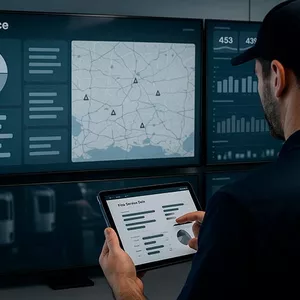
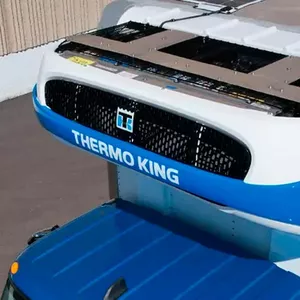
Thermo King TracKing and Connected Solutions become most useful when a fleet needs a better service decision before a routine complaint turns into route loss, product risk, or another unnecessary dispatch. On connected Thermo King units, remote diagnostics can reveal how temperature behaved across the trip, whether the complaint built gradually or arrived suddenly, whether the event belongs to an active condition or stored history, and whether the next step should be scheduling, escalation, or a stronger hold decision.
Our service uses available Thermo King remote diagnostics data to support reefer triage for fleets operating across Chicago, the suburbs, and Chicagoland. It turns TracKing visibility, Connected Solutions signals, and complaint history into a clearer uptime decision. Fleets get fewer vague handoffs, less guess-driven dispatch, and stronger release judgment on units that still look normal after an unstable route event.
What this service helps fleets solve
Thermo King remote diagnostics matters most when the trailer still moves, the unit still runs, and the complaint is easy to underestimate. A unit may restart. A temperature complaint may soften. An alarm may clear. None of that proves stability. Fleets need a service reading of what happened before the present moment looked normal again.
This service is built for that narrow operating problem. It supports TracKing and Connected Solutions review as part of Thermo King reefer service. The central question is direct: what does the connected record reveal about current risk, repeat-failure potential, and the correct next service path?
What Thermo King TracKing and Connected Solutions can add to reefer diagnostics
TracKing functions as a telematics portal for real-time fleet monitoring, but its service value depends on what data the fleet is capturing and how that data is interpreted. CargoWatch, ServiceWatch, fuel visibility, Thermo King alert monitoring, and other connected layers do not replace repair. They improve triage and make the service decision more accurate.
CargoWatch matters because box temperature history is often more valuable than the display at the exact moment someone looks at the trailer. Where the configuration supports it, CargoWatch can log box temperature over time, compare Start of Trip and End of Trip behavior, record data from up to six independent probes, and support food safety recordkeeping. That matters when the real complaint is drift, weak pull-down, slow recovery, or hot spot exposure inside the load rather than one obvious shutdown.
ServiceWatch matters because pre-alarm data can change the whole reading of a failure. When a unit logs behavior before the alarm point, the service team can separate a problem that built gradually from one that arrived abruptly. Gradual deterioration and sudden fault onset do not point to the same service risk, even when the visible complaint sounds similar.
Two-way telematics matters when the installed system supports remote start and stop functions, because it changes how a fleet interprets event timing, restart behavior, and communication between the unit state and the service complaint. It does not remove the need for on-site work. It adds decision context.
WinTrac 6.10+ matters because data download and review become part of a stronger evidence trail instead of a rough verbal reconstruction. For fleets that rely on connected diagnostics, the difference between a remembered complaint and an actual data record is often the difference between a clean repair path and another incomplete cycle.
Real-time fuel monitoring also matters because some uptime decisions fail when the complaint is framed as cooling-only while the operating risk is tied to supply or run continuity. When the TracKing portal shows fuel-side context, the service discussion becomes more specific and more useful.
What connected data can clarify before a dispatch decision
| Connected layer | What it can clarify | Why it matters for service |
|---|---|---|
| TracKing telematics portal | Real-time fleet monitoring context around the unit, timing, and complaint visibility | Helps separate a current operating issue from a vague report with no usable timeline |
| CargoWatch | Box temperature logging, Start of Trip and End of Trip comparison, and probe-based cargo temperature patterns | Supports better reading of drift, recovery weakness, and load-side hot spot exposure |
| Up to six independent probes | Whether the issue looks uniform across the load or concentrated in one area | Changes how the fleet interprets cargo risk and complaint severity |
| ServiceWatch | Pre-alarm data that shows whether a fault built gradually or appeared suddenly | Improves repeat-failure interpretation and reduces guess-driven escalation |
| WinTrac 6.10+ data access | Usable downloaded records instead of memory-based complaint retelling | Strengthens service scoping and lowers the chance of weak close-out logic |
| Two-way telematics | Remote start and stop event context where supported by the installed system | Improves timing analysis and helps interpret restart-related complaints more accurately |
| Fuel monitoring in the portal | Whether run continuity and fuel-side context belong in the complaint picture | Prevents narrow temperature-only readings of a broader uptime risk |
Why this matters for maximum uptime
Maximum uptime depends on classifying risk correctly before the next lane. A trailer may look calm at arrival while the connected record shows temperature instability during the period that actually mattered. An alarm may appear minor until ServiceWatch shows that the pattern built gradually and did not arrive as a one-off event. A routine complaint may stop looking routine once Start of Trip and End of Trip behavior no longer align.
Thermo King Connected Solutions works best as a service input. Its strongest value is earlier separation between units that can stay in a controlled service window and units that no longer justify a relaxed release decision.
Fleet situations where remote diagnostics becomes commercially important
Repeated alarms that clear, then return later
Repeated alarms often signal that the visible symptom was interrupted rather than resolved. Connected history helps show whether the pattern is episodic, route-linked, or becoming harder to dismiss with each new occurrence. That matters when a fleet wants to avoid another weak release and another avoidable callback.
Temperature complaints with no dramatic shutdown
Some of the most expensive reefer failures do not begin as total-loss stories. They begin as weak pull-down, slower recovery after openings, or box temperatures that do not hold as tightly as they should. CargoWatch is valuable here because box temperature history and multi-probe variation can reveal whether the complaint stayed local, widened across the load, or worsened between trip start and trip end.
Units that look normal when they finally arrive for attention
This is one of the clearest uses of thermoking tracking and connected reefer monitoring. Present condition can look acceptable even when route history says the unit no longer deserves easy trust. Connected diagnostics helps the fleet judge the unit by what happened under work conditions, not only by how it behaves during a calm moment in the yard.
Restart-related complaints that need timing context
Where the installed system supports two-way telematics and recorded event history, restart timing and sequence context can matter. A restart event without surrounding operating information is easy to overread or underrate. Connected Solutions review helps place that event inside the broader complaint pattern instead of treating it as an isolated curiosity.
Cases where fuel context belongs in the diagnosis
Real-time fuel monitoring can become important when the unit complaint sounds thermal but the uptime risk includes run continuity. A narrow reading of the complaint can send the job in the wrong direction. Connected fuel visibility supports more accurate triage when the pattern points beyond basic cooling performance.
What our Thermo King remote diagnostics service includes
Our team uses available TracKing and Connected Solutions data as part of a reefer service assessment built for fleet decision-making. The work is not limited to reading one alarm or repeating what the portal already shows. The service value comes from interpretation, scope control, and a clearer next-step recommendation.
- Review of the fleet complaint against available Thermo King connected records
- Reading of CargoWatch, ServiceWatch, temperature history, event timing, alert monitoring, and fuel-side context where available
- Separation of active fault state, stored history, and repeat-pattern behavior
- Assessment of whether the case belongs in remote triage, scheduled reefer service, or stronger on-site escalation
- Clearer intake and handoff for Chicago-area fleets that need a tighter service decision before the next dispatch
What remote diagnostics does well and where it still has limits
Thermo King remote diagnostics improves classification when the complaint is vague but the connected record is strong. A unit that appears normal in the yard may still carry CargoWatch drift, pre-alarm ServiceWatch evidence, or portal-side event timing that changes the release decision completely.
Its limit is straightforward. Not every installed configuration supports the same connected features, and partial visibility should not be treated as complete proof. Remote diagnostics makes service decisions sharper; it does not replace physical reefer repair.
Why a local service frame matters in Chicago, the suburbs, and Chicagoland
Connected data is more useful when it is read against the operating reality of the market. Chicago-area reefer work often means stop-and-go delivery patterns, dock holds, restart windows, urban congestion, short reload gaps, and route segments that make intermittent complaints look smaller than they are. A unit can survive one local cycle and still be a poor candidate for a longer commitment later in the day.
Local reefer service judgment matters as much as the telematics feed itself. For fleets running Chicago, the suburbs, and Chicagoland routes, remote reefer diagnostics should narrow the service path quickly and reduce uncertainty while the unit still matters to the schedule.
What to have ready when requesting TracKing and Connected Solutions diagnostic support
- Unit identification and the current Thermo King complaint
- Whether the issue is active now, intermittent, or recently cleared
- Any known repeat-alarm history tied to the same complaint
- Whether CargoWatch, ServiceWatch, TracKing portal visibility, or downloaded data is available
- Whether the concern is tied to route temperature drift, restart behavior, fuel context, or a recent release decision
- The operating scenario that matters most: in transit, at dock, in yard, after restart, or after recent service
Remote diagnostics should reduce uncertainty before the next route
Thermo King TracKing and connected fleet solutions are most valuable when they move a fleet from vague concern to specific service direction. Better use of CargoWatch, ServiceWatch, and telematics-side event data leads to better triage, stronger release discipline, and fewer avoidable repeat failures. If your fleet is dealing with a connected Thermo King complaint in Chicago, the suburbs, or across Chicagoland, bring the unit details, the complaint pattern, and the available data into the conversation. Our team can turn that information into a clearer service decision and a more reliable uptime plan.