

Commercial self-contained HVAC repair involves a complete indoor equipment and building-interface system. Cooling, heating, airflow, condenser-water or other heat rejection, drainage, electrical operation, controls, noise, and the served space can influence one another. ClimateService diagnoses authorized Chicago systems from the actual complaint and operating state, then verifies corrective work without assuming that an indoor cabinet isolates the fault from the rest of the building.
Define the served area and failure pattern
Identify equipment location, served zones, occupancy, schedule, setpoints, complaint timing, weather, internal load, alarms, noise, odor, leakage, and recent work. Determine whether the issue is loss of cooling, heating, airflow, humidity control, ventilation, drainage, or stable cycling. Multi-tenant and high-rise spaces can make responsibility and access part of the diagnostic plan.
Capture operation without erasing the sequence
Commands, fan status, stages, entering and leaving air, water temperatures where applicable, electrical current, refrigeration conditions, safeties, valves, drainage, and control history should be collected while the problem exists when safe. A reset can restore activity yet remove evidence that explains an intermittent lockout or unstable transition.
Inspect cabinet, isolation, and mechanical-room conditions
Panels, seals, insulation, access, vibration isolation, floor or frame, corrosion, condensate evidence, housekeeping, ventilation, temperature, water exposure, service clearances, and adjacent equipment affect reliability. An overheated, flooded, restricted, or inaccessible room can repeat faults after a component is replaced.
Verify airflow and distribution
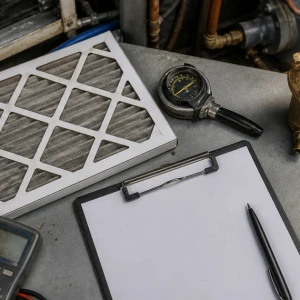
Filters, racks, bypass, return or plenum path, blower wheel, motor, bearings, belts, sheaves, drive, coil, dampers, supply ducts, terminals, external static, and zone return paths should be correlated. Low airflow can create coil icing, compressor trips, electric-heat limits, poor humidity response, noise, and comfort loss.
Evaluate refrigeration from load and heat transfer
Compressors, circuits, metering, refrigerant temperatures and pressures, piping, insulation, oil evidence, evaporator, condenser, safeties, current, and staging should be interpreted with airflow and heat rejection. Refrigerant handling remains authorized work. Charging without finding leaks or correcting air and water conditions can create another failure.
Check condenser-water or alternate heat rejection
Water-cooled units depend on pumps, valves, strainers, flow, entering temperature, pressure where available, tower or loop operation, piping, treatment, and controls. Air-cooled or remote-condensing arrangements have different fans, coils, piping, and environment. The repair boundary should distinguish cabinet work from central plant and water-treatment ownership.
Review drainage and leak sources
Drain pan, trap, slope, line, pump where used, cleanout, insulation, sweating, coil icing, valves, piping joints, humidification components, and nearby building systems can produce water. The visible floor location does not always identify the source. Cleanup, containment, and building-material responsibilities should be assigned.
Test heating and reheat functions
Electric, hot-water, steam, heat-pump, or other heating and reheat components require configuration-specific tests. Valves, actuators, coils, heaters, contactors, limits, safeties, pumps, airflow, sensors, and sequences influence operation. Fuel-fired configurations require qualified procedures where present and should never be assumed from the cabinet family name.
Separate electrical and control causes
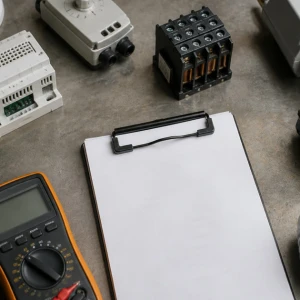
Disconnects, fuses, breakers, contactors, terminals, transformers, drives, motors, control voltage, grounding, safeties, sensors, thermostats, schedules, BAS commands, overrides, alarms, and interlocks can interrupt or distort operation. Protective devices may be responding correctly. The initiating mechanical, electrical, utility, or control condition should be identified before reset.
Plan repair inside an occupied facility
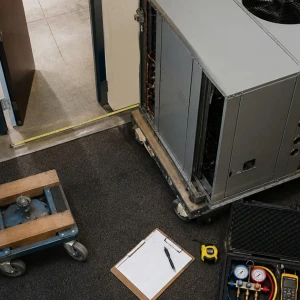
Mechanical-room access, elevators, corridors, component dimensions, rigging, noise, dust, water isolation, shutdown, tenant communication, process consequence, parts, temporary conditioning, and trade coordination influence execution. Temporary operation should have capacity, monitoring, expiration, and response limits. Occupied-site protection is part of repair quality.
Verify the repaired mode and connected system
Testing may include fan, airflow, stages, air temperatures, refrigeration response, water flow and temperatures, valves, current, safeties, heating, drainage, controls, alarms, cycling, noise, vibration, and representative spaces. Central-loop, weather, or load limits should be documented with deferred conditions and responsible follow-up.
Distinguish a unit fault from a central-loop event
When several cabinets lose capacity together, compare loop temperatures, pump and tower status, pressure or flow evidence, building schedules, treatment work, outages, and BAS alarms before opening the same repair on every unit. When only one cabinet is affected, compare its valve, strainer, condenser, sensors, stages, and branch conditions. This simple ownership test can prevent duplicated parts and repeated tenant disruption.
Monitor the original failure window
An afternoon high-loop trip, overnight scheduling error, humid-day drainage issue, or intermittent actuator fault may not appear during a short visit. The record should identify the necessary load, time, water condition, or occupancy, the points or physical readings to observe, the responsible reviewer, and the response threshold. Deferred evidence becomes a planned follow-up instead of an unsupported declaration.
ClimateService delivers a traceable indoor-system handoff
ClimateService records complaint, operating evidence, confirmed cause, repaired components, water or heat-rejection context, measurements, photographs, tested modes, unavailable conditions, open building interfaces, and next maintenance within its scope. Facility teams receive a baseline that prevents rediscovery without unsupported guarantees about central systems, utilities, energy, or remaining life.