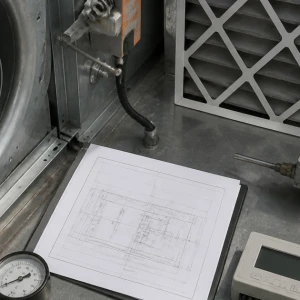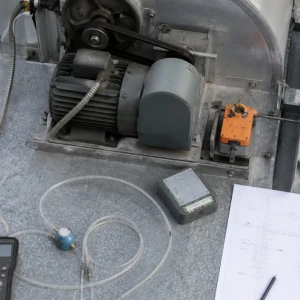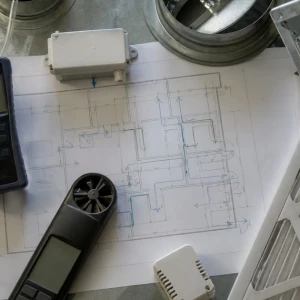


Commercial indoor air quality service begins with a defined concern rather than a predetermined product. ClimateService supports authorized Chicago facilities by mapping reported conditions, possible sources, pathways, outdoor air, filtration, moisture, temperature, humidity, airflow, pressure, HVAC equipment, drains, occupancy, and operations. The service identifies HVAC evidence and corrective boundaries without making medical diagnoses, promising health outcomes, or certifying legal compliance.
Define the IAQ concern and decision
Odor, stuffiness, visible moisture, condensation, dust, irritation reports, temperature or humidity patterns, pressure, outdoor events, occupancy changes, renovation, cleaning, equipment operation, and complaint timing are recorded. The facility identifies affected areas and desired decision. Vague “air testing” can generate numbers without relevance, so questions and responsible stakeholders are established before instruments or products are selected.
Map potential sources and transport pathways
Outdoor intakes, nearby exhaust, roofs, loading docks, garages, janitorial areas, materials, stored products, drains, plumbing, moisture, construction, occupants, processes, ducts, returns, shafts, doors, and pressure can move conditions through a building. Source review does not assume every odor or particle originates in HVAC. It identifies plausible relationships for measurement, inspection, and routing.
Inspect outdoor air and exhaust relationships
Intakes, louvers, dampers, screens, filters, fans, controls, schedules, exhaust operation, make-up air, transfer paths, doors, and building pressure are observed. A commanded damper position is compared with physical movement and operating evidence. Ventilation design criteria, kitchen systems, specialized process exhaust, and code acceptance remain with their responsible owners when beyond routine service.
Review filtration as an installed system
Filter type, fit, rack, loading, bypass, seals, pressure relationship, fan capacity, access, replacement practice, and downstream cleanliness matter. Higher-rated media is not automatically compatible with every fan or cabinet. A filter strategy should reflect the defined concern and system capability. Products are not presented as universal solutions when sources, moisture, or ventilation remain unaddressed.
Investigate moisture and humidity pathways
Cooling coils, drain pans, traps, lines, pumps, wet insulation, cold ducts or piping, vapor seals, outdoor air, building envelope, roofs, plumbing, humidification where present, schedules, and pressure can affect moisture. Surface condensation differs from hidden water intrusion. ClimateService documents HVAC evidence and coordinates remediation, envelope, roofing, or plumbing ownership when the source lies outside its scope.
Connect temperature, airflow, and pressure
Fans, coils, filters, dampers, ducts, terminals, returns, doors, partitions, schedules, equipment capacity, ventilation, exhaust, and stack or wind influence occupied conditions. Low airflow can increase temperature and humidity variation. Pressure can transport air from adjacent zones. Representative measurements are taken under documented operating conditions rather than interpreted without equipment context.
Use instruments that match the question
Temperature, relative humidity, carbon dioxide as an occupancy and ventilation context indicator, pressure, airflow, particulate readings, or other parameters may be useful when the method and limitations fit the decision. A single short measurement rarely represents every hour or zone. Specialized sampling, laboratory analysis, medical interpretation, and regulatory protocols require qualified independent scope where appropriate.
Inspect HVAC cleanliness without overclaiming
Filters, coils, pans, fan sections, accessible cabinets, insulation, dampers, and ducts are visually reviewed for condition relevant to operation. Dust alone does not establish a health conclusion, and inaccessible systems are not declared clean or contaminated by assumption. Cleaning or remediation scope follows observed conditions, material, access, source control, and responsible protocols.
Correlate complaints with time and operation
Schedules, occupancy, weather, outdoor events, equipment modes, ventilation, exhaust, humidity, cleaning, deliveries, construction, and complaint timing can reveal patterns. Targeted trends or repeated measurements may distinguish persistent from intermittent conditions. Monitoring receives selected points, time basis, review owner, and decision thresholds so data leads to action instead of indefinite collection.
Prioritize source control and verified HVAC corrections
Corrective work may involve drains, filters and racks, dampers, fan operation, sensors, controls, coil or cabinet condition, insulation, airflow, ventilation, exhaust, or pressure relationships within scope. Building materials, roof or plumbing leaks, processes, housekeeping, and remediation route elsewhere. Add-on treatment is evaluated only after the problem and air path are understood.
Verify the corrected condition responsibly
Follow-up repeats relevant equipment states, airflow or pressure relationships, temperature, humidity, drainage, ventilation, filtration, alarms, and representative space observations. Not every concern can be resolved or proven during one visit. Weather, occupancy, source events, hidden construction, and limited access remain explicit, with monitoring or specialist referral when evidence requires it.
Receive an evidence-based IAQ record
ClimateService documents concern, affected areas, timing, sources and pathways reviewed, operating conditions, outdoor air, exhaust, filters, moisture, temperature, humidity, airflow, pressure, HVAC condition, instruments and limitations, corrections, follow-up results, open building or specialist work, and responsible next steps. The handoff supports action without unsupported medical or compliance claims.