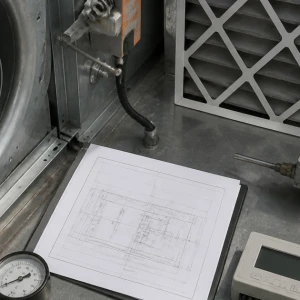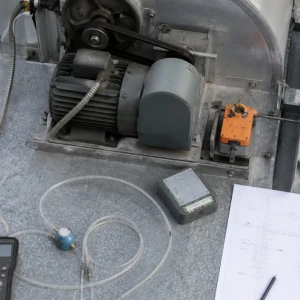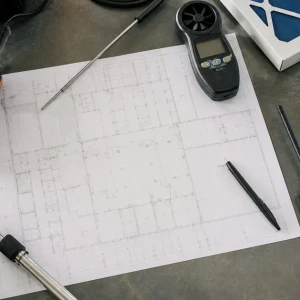


Specialized environment ventilation and pressure-control service supports commercial spaces where intentional airflow direction, pressure relationship, ventilation, filtration, temperature, humidity, monitoring, or recovery behavior matters beyond standard comfort. ClimateService works within authorized Chicago HVAC scope and verified owner criteria. The service does not invent healthcare, laboratory, cleanroom, process, life-safety, or legal requirements and does not issue compliance certification by default.
Obtain the approved environmental intent
The project begins with served rooms, adjacent spaces, intended pressure relationship or airflow direction, operating modes, schedules, doors, occupancy, process, equipment, filtration, temperature and humidity needs, alarms, response expectations, available drawings, and responsible acceptance authority. Without an approved basis, measurements can describe current behavior but cannot establish that a specialized space meets its required purpose.
Map supply, return, exhaust, and transfer paths
Air handlers, terminal units, supply ducts, diffusers, return or relief, exhaust grilles and fans, transfer openings, door undercuts, leakage paths, shafts, and adjacent areas are mapped. One room’s pressure depends on the network around it. Hidden transfers, open ceilings, shared returns, or unrecognized exhaust can undermine a control strategy even when individual equipment operates.
Inspect doors and physical room boundaries
Door position, closer, latch, sweep, seals, frame, frequency of opening, pass-throughs, penetrations, ceiling, wall condition, and other leakage paths affect pressure. Door force and airflow may change with nearby systems. Building-envelope and architectural repairs remain with responsible trades, but their influence is documented before controls are adjusted to compensate for uncontrolled leakage.
Verify fans, dampers, and terminal devices
Fan operation, drives, speeds, filters, coils, dampers, actuators, linkages, valves, terminal units, diffusers, grilles, VAV devices where present, and accessible air paths are checked. A pressure-control loop cannot correct a failed exhaust fan or stuck damper. Equipment readiness precedes final tuning and acceptance measurements.
Test pressure and airflow sensors in context
Sensor identity, location, reference side, tubing route, kinks, moisture, filters, zero, range, scaling, wiring, controller point, trend, alarm, and reference measurement affect credibility. A small pressure difference can be overwhelmed by an open door or incorrect tube reference. Service records door and system state whenever readings are interpreted.
Review control sequences and recovery behavior
Occupied and unoccupied modes, supply and exhaust tracking, pressure setpoint, fan or damper response, limits, door events, delays, alarms, fallback, loss of communication, power recovery, shutdown, and restart are compared with approved intent. BAS-first programming routes to Controls/BAS when the supervisory layer owns the project, but physical ventilation response remains part of verification.
Evaluate filtration and pressure drop
Filter type, fit, seals, rack, loading, bypass, pressure drop, fan capacity, replacement practice, and downstream condition influence airflow and room relationships. Specialized filtration criteria require responsible confirmation. Installing more restrictive media without reviewing fan and pressure capacity can destabilize the space and reduce intended ventilation or exhaust.
Measure under representative operating states
Supply, return, exhaust, transfer, room pressure, door condition, fan and damper state, temperature, humidity where relevant, adjacent systems, occupancy, and outdoor conditions are recorded. Testing may stage normal modes and door events when authorized. One closed-door snapshot is not presented as proof of recovery, alarm response, or performance during actual operation.
Separate room control from building pressure
Make-up air, general exhaust, supply and return, elevators, stairs, shafts, docks, vestibules, wind, and stack effect can change the reference around a controlled room. A local controller may respond correctly while the building shifts. The investigation identifies whether correction belongs to the room, air handler, exhaust, make-up air, controls, distribution, or broader design.
Coordinate changes through controlled authorization
Pressure setpoints, airflow minimums, fan speeds, damper limits, alarms, delays, and sequences can affect adjacent areas and process needs. Changes require purpose, approval, risk review, backup, version, test plan, rollback, and final settings. Life-safety and critical-process interfaces are not overridden during routine service to force a preferred room reading.
Verify alarms, doors, and restoration
Functional checks may include normal operation, door opening, recovery, alarm threshold and delay, sensor failure where approved, loss of fan proof, mode changes, shutdown, restart, and representative adjacent-space response. Exact tests follow responsible criteria. Unavailable process, occupancy, weather, or system states are documented with a deferred test and named owner.
Deliver a bounded specialized-environment record
ClimateService documents approved basis supplied, room and adjacent map, air paths, physical boundaries, equipment, filters, sensors, controls, alarms, operating states, instruments, airflow and pressure readings, changes, final tests, restored settings, limitations, deferred conditions, responsible acceptance boundary, and open design or building work. The handoff supports informed facility decisions, later seasonal comparison, repeatable test preparation, stable operating review, contractor continuity, and responsible acceptance review without overstating certification.