


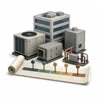
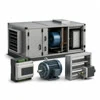
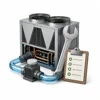
Commercial HVAC service begins with the building’s operating problem and the decision the facility team needs to make. A failed rooftop unit, an unstable multi-zone system, a planned chiller replacement, and a preventive maintenance program are different engagements. ClimateService organizes the Commercial section around those differences so property managers, facility teams, business owners, and project stakeholders can reach the correct service path without sorting through duplicate pages.
Choose the commercial HVAC service that matches the situation
| Current need | Best starting point | Primary outcome |
|---|---|---|
| Equipment stopped, lost capacity, or developed a defined fault | Commercial HVAC Repair | Fault isolation, approved correction, and operating verification |
| Loss of conditioning creates immediate operational exposure | Emergency Commercial HVAC Repair | Risk-based triage, stabilization, and a documented completion path |
| Operating equipment needs routine condition service | Commercial HVAC Maintenance | Condition review, maintenance work, and recorded findings |
| A facility needs recurring planned service | Preventive Maintenance Programs | A defined visit structure, asset coverage, and reporting cadence |
| New equipment or a building project is being planned | Commercial HVAC Installation | Scope coordination, integration, startup, and handover |
| Existing equipment is approaching a changeout decision | Replacement or Replacement Planning | Evidence-based project scope, phasing, and transition planning |
Repair and diagnostics serve different stages of the problem
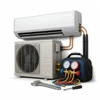
Repair is the owner when a defined operating problem needs correction. The Repair branch also contains the existing symptom and diagnostics pages because those resources already serve distinct search intents and share the same operational route. Complete loss of cooling or heating, weak or uneven performance, troubleshooting, formal diagnostics, and repeat failures each receive a focused page without creating another competing repair category.
Emergency language stays on one owner page. Searches for 24-hour, after-hours, weekend, urgent, and same-day commercial HVAC repair describe availability or urgency; they do not justify separate URLs. The emergency page explains how consequence, building use, redundancy, access, and current conditions affect dispatch without promising a numerical arrival time.
Maintenance is separated from programs and seasonal preparation
Commercial HVAC Maintenance covers a routine or one-time service visit for equipment that is generally operating. Preventive Maintenance Programs cover a recurring relationship with a planned asset and visit structure. Seasonal Maintenance covers pre-season preparation and changeover work. Keeping those intents separate lets a facility compare the right scope while preventing three pages from making the same promise.
Findings from maintenance may route to repair, controls, replacement planning, or an equipment-specific service. That route is documented as a recommendation; the original visit does not quietly turn into a different project.
Installation, replacement, and retrofit require different project decisions
Installation establishes new equipment or a new HVAC path for a facility project. Replacement begins with an existing asset and includes removal, interface review, changeout constraints, and return to operation. Retrofit work improves part of the existing system without making full replacement the default answer. Replacement Planning supports the earlier decision stage: repair-versus-replace analysis, lifecycle forecasting, and phased capital work.
Occupied facilities add scheduling, access, tenant communication, shutdown limits, roof logistics, controls coordination, and trade dependencies. Those constraints belong in the project scope before work begins.
Equipment-specific commercial HVAC service
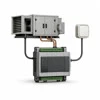
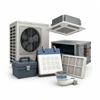
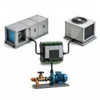
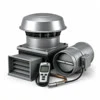
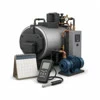
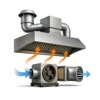
The Commercial section includes rooftop and packaged units, self-contained systems, chillers, cooling towers, VRF and VRV systems, boilers and hydronic loops, controls and building automation, ventilation, air distribution, mission-critical cooling, and fixed-site commercial refrigeration. Equipment pages own the work that depends on a particular system family; broad service pages remain responsible for the initial repair, maintenance, installation, or replacement intent.
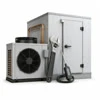
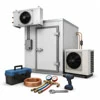
Commercial refrigeration here means fixed-site equipment such as walk-in coolers, walk-in freezers, and restaurant refrigeration. Transport refrigeration remains outside this branch.
Service planning for different facilities
An office property, restaurant, warehouse, healthcare facility, school, manufacturing building, and high-rise property can use similar equipment while carrying different operating constraints. Facility pages focus on occupancy, access, scheduling, environmental priorities, and stakeholder coordination. They do not duplicate the equipment owner or claim regulatory compliance that has not been confirmed.
What a professional commercial HVAC engagement should leave behind
A useful engagement produces an understandable record of the complaint or project goal, conditions reviewed, work approved, findings, completed scope, limitations, and next decision. Verification must fit the service. A repair should confirm that the corrected system can operate through a relevant cycle. Installation and replacement need startup and handover appropriate to the project. Maintenance needs recorded condition and recommendations that distinguish current work from future options.
ClimateService serves commercial properties in Chicago and nearby suburbs. The company is licensed and insured, carries $1 million in general liability coverage, can provide a certificate of insurance and additional-insured documentation when required, and holds EPA 608 Type II certification for regulated refrigerant work. Availability includes 24/7 and same-day capability without a fixed response-time promise.
Start with the building’s current decision
Share the property location, affected equipment if known, present operating condition, building impact, access requirements, and any recent work or changes. That information identifies the correct branch and helps define whether the next step is repair, scheduled service, diagnostics, a project assessment, or planned equipment work.
A focused intake also keeps the first conversation useful for the people approving access, service, and project scope.