
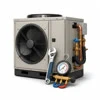
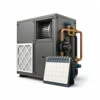
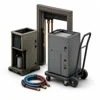
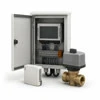
Commercial self-contained HVAC units combine major refrigeration, airflow, controls, and sometimes heating functions in a cabinet installed within the building or directly beside the served area. Many applications reject heat through a condenser-water loop, while others use different configurations. The cabinet is one asset, but reliable operation depends on the connected water, air, electrical, controls, drainage, and occupied-space boundaries.
Confirm what “self-contained” means at this property
The term can describe vertical floor-by-floor units, perimeter systems, interior mechanical-room cabinets, water-cooled packaged units, or equipment with specialized distribution. Model, configuration, condenser method, heating source, controls, served footprint, access, and operating history should be confirmed before service or replacement assumptions are made.
Separate repair, maintenance, and replacement intent
Repair addresses an active fault or degraded function. Maintenance follows a recurring cabinet- and loop-aware scope. Replacement or upgrade compares the existing application, capacity, dimensions, water and air connections, controls, refrigerant strategy, access, downtime, and acceptance requirements. Dedicated child pages own each decision so this category remains the equipment-family hub.
Cabinet diagnostics follows the failed function
Complaints may include no cooling or heating, weak airflow, high humidity, short cycling, nuisance trips, water, noise, odor, intermittent operation, or one affected floor or tenant zone. Evaluation can include commands, safeties, fans, motors, belts, coils, compressors, refrigerant-circuit behavior, heating components, valves, sensors, electrical conditions within the unit, condensate, and connected distribution.
A running fan does not prove useful cooling, and a cooling-circuit alarm does not prove the cause is confined to the cabinet. Condenser-water flow, loop temperature, strainers, pumps, valves, controls, or heat-rejection equipment can shape the same symptom.
Condenser-water conditions belong in the service picture
For water-cooled self-contained units, relevant evidence may include entering water condition, flow indication, valve response, strainers, hoses or piping, loop pumps, plant availability, and controls sequence. Water treatment remains a separately managed responsibility. Mechanical service documents observed conditions and coordinates with the responsible facility or treatment provider where appropriate.
Airflow and distribution affect cabinet performance
Filters, coils, fans, belts, return path, supply duct, grilles, dampers, static conditions, and occupied-space changes can affect capacity and reliability. Restricted airflow can influence coil temperature, refrigerant behavior, heating operation, noise, and space delivery. The evaluation follows the result from cabinet to affected area rather than stopping at startup.
Condensate and interior access raise building risks
Pans, drains, traps, pumps where installed, insulation, cabinet seams, floor protection, and adjacent finishes matter because the equipment is inside the building. A service scope should distinguish equipment drainage from building plumbing or envelope conditions. Water near electrical sections, recurring overflow, or concealed damage requires controlled access and appropriate ownership.
Maintenance should match cabinet and loop configuration
A planned scope may address filters, coils, fans, belts, bearings, drains, safeties, electrical and control connections, refrigerant-circuit observations, heating operation, condenser-water components at the unit, sensors, valves, cabinet condition, and operating checks. Frequency and task depth depend on operating hours, environment, manufacturer guidance, loop condition, access, season, and service history.
Interior equipment access controls field time
Mechanical closets may require tenant notice, escorts, furniture or storage removal, ceiling or corridor protection, freight-elevator scheduling, noise limits, and restricted work hours. The unit may need partial disassembly for component removal. Measured access, component dimensions, handling path, and restoration requirements should be known before major repair or replacement.
Replacement and upgrades are building projects
A replacement may change cabinet dimensions, weight, air connections, condenser-water piping, valves, electrical requirements, refrigerant, controls, drainage, sound, service clearances, and lifting or elevator needs. An upgrade can target controls, motors, compressors, airflow, water-side components, or other supported assemblies without replacing the full cabinet. Each option needs a defined retained boundary.
Startup must prove connected-system response
Readiness checks confirm connections, rotation, water availability, drainage, controls, and safe initial operation. Functional testing follows cooling and heating calls as applicable, fan response, valves, safeties, stages, condensate, controls, and delivery to the served area. A normal cabinet display is not sufficient when the original complaint occurred in the occupied space.
Verification and handoff
Repair verification may include stable operation, temperature response, airflow, water-side response, safety behavior, drainage, controls, and affected-zone improvement. Replacement handoff can add equipment identity, startup records, control points, maintenance needs, warranty information, operating limits, and remaining seasonal tests. Conditions unavailable during the visit should be stated.
Choose the correct self-contained unit page
Use the dedicated pages for self-contained unit repair, maintenance, or replacement and upgrades. Packaged and rooftop units keep their own categories because their installation and access conditions differ. Water-loop, cooling-tower, controls, ventilation, and capital-planning pages retain separate intent where the decision extends beyond the cabinet.
Request self-contained HVAC service
ClimateService provides commercial self-contained HVAC unit service in Chicago and nearby suburbs. Share the unit designation and configuration, served area, symptom, alarms, available water-loop information, recent work, interior access, tenant restrictions, and an authorized contact. Complete context helps route the request without treating every cabinet problem as the same packaged-unit call.