
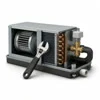
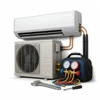

Commercial air distribution and DX systems connect heating or cooling equipment with the air and spaces a facility actually uses. ClimateService routes authorized Chicago work across fan coil units, light commercial split systems, testing and balancing, and ductwork repair without turning the category into generic HVAC repair. Ventilation, make-up air, exhaust, BAS, rooftop units, VRF, hydronics, and broad replacement retain their own first-intent owners.
Use this branch for distribution-first needs
This category fits when the defining noun or service is fan coil, light commercial split system, air balancing, TAB, ductwork, leakage, or air distribution. A general no-cooling complaint belongs to broad repair until evidence narrows it. A rooftop unit, VRF system, BAS network, ventilation system, or hydronic plant remains in its equipment or system branch even when airflow is part of operation.
Connect equipment capacity with delivered air
Coils, fans, filters, drives, dampers, ducts, insulation, terminals, returns, pressure relationships, controls, and space load determine whether equipment output reaches occupants. A compressor or coil can operate while low airflow prevents useful delivery. Conversely, perfectly balanced ducts cannot correct equipment that lacks heating or cooling. Airside service measures the relationship rather than assigning every symptom to one component.
Route fan coil unit service correctly
Fan coil units combine a local fan and coil with filters, valves or refrigerant components depending on design, condensate, controls, cabinet, and room air paths. The FCU page owns equipment-specific repair and maintenance intent. Central hydronic production, broader piping loops, building ventilation, and unrelated terminal equipment remain outside unless they are necessary interfaces to confirm the FCU boundary.
Keep light commercial split systems distinct
Commercial split systems use indoor and outdoor units, refrigerant piping, drainage, power, controls, and space airflow. They are not automatically residential equipment, VRF, or rooftop units. The dedicated page owns service for conventional commercial split configurations when the equipment noun is known, while broad installation and replacement planning remain in their established project categories.
Use TAB for measured distribution verification
Testing, adjusting, and balancing measures air quantities, pressure, fan operation, terminal delivery, and system relationships against an approved basis. TAB is not a substitute for generic fault diagnosis or commissioning of every building system. It belongs here when measured distribution is the primary need, including post-project verification and correction within the accessible airside system.
Assign ductwork-first repair to its owner
Damaged, leaking, disconnected, restricted, poorly supported, corroded, wet, uninsulated, noisy, or unsuitable ducts can waste delivered capacity and affect spaces. The ductwork page owns direct repair, modification, and replacement intent. Exhaust and make-up-air systems route to ventilation when that purpose is primary; complete building replacement and budgeting use their separate planning owners.
Distinguish airflow from ventilation
Air distribution describes how conditioned or process air moves through equipment, ducts, and terminals. Ventilation addresses outside air, exhaust, replacement air, IAQ, and specialized pressure needs. They interact through shared fans and ducts, but search intent and service ownership differ. Clear routing keeps a duct leakage repair from competing with a make-up-air service page.
Include controls without absorbing BAS
Thermostats, sensors, fan commands, valves, dampers, drives, safeties, and local sequences affect distribution and DX operation. Airside service verifies these interfaces far enough to explain equipment and space response. BAS programming, networks, supervisory logic, controls integration, and automation modernization remain under Controls/BAS once the issue is controls-first.
Review condensate, insulation, and moisture
DX coils and fan coils create condensate; cold ducts and piping can condense moisture when insulation or vapor sealing fails. Drain pans, traps, slope, pumps where used, cleanouts, terminations, insulation, penetrations, and surrounding humidity influence water. Moisture findings are routed among equipment, ductwork, drainage, envelope, and facility responsibilities instead of being hidden as a generic IAQ claim.
Verify representative occupied results
Useful verification can connect equipment mode, fan and coil operation, filters, pressure, airflow, terminal delivery, return path, temperatures, humidity where relevant, controls, drainage, and representative spaces. Exact tests follow the selected service. Weather, occupancy, ceiling access, design information, and system load may limit conclusions, so unavailable conditions receive explicit monitoring or follow-up.
Choose the page that owns the request
Use fan coil service for FCU-first intent, split-system service for conventional commercial split equipment, TAB for measured balancing, and ductwork repair for physical distribution components. Use Ventilation/IAQ for outside-air or exhaust-first work, Controls/BAS for automation-first work, RTU or VRF for those equipment families, and broad repair when the system has not yet been identified.
Receive a distribution-focused handoff
ClimateService documents the selected owner, equipment and air path, complaint, measurements, controls context, coil and fan findings, duct and terminal conditions, pressure and airflow evidence where measured, drainage and insulation, completed work, representative space results, limitations, open interfaces, and recommended next steps. Facility teams receive a usable routing baseline rather than an overlapping list of generic services.