
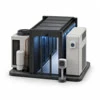
Mission-critical cooling service is built around continuity rather than ordinary comfort. ClimateService supports authorized Chicago facilities by connecting heat load, precision equipment, airflow, temperature, humidity, controls, alarms, redundancy, power events, maintenance windows, and recovery procedures. Data-center cooling, precision cooling, and CRAC/CRAH service receive distinct owners without absorbing all chiller, BAS, installation, or facility-industry intent.
Use this branch when uptime defines the risk
This category fits when a cooling interruption threatens computing, telecom, controls, laboratory support, or another critical room. Generic office complaints stay with commercial repair. Chiller plants, cooling towers, BAS networks, replacement planning, and industry overview pages remain separate unless their first-intent owner becomes the actual request.
Establish the protected space and operating envelope
Room function, heat sources, rack or process density, acceptable environmental range, airflow pattern, operating schedule, occupancy, access, security, alarms, escalation contacts, and available redundancy are documented. Service assumptions must match the facility's approved criteria; unsupported universal setpoints or compliance claims are not substituted for owner requirements.
Map cooling capacity to the active heat load
Installed nameplate capacity alone does not prove usable coverage. Running equipment, distribution losses, airflow short circuits, containment, fan performance, coil condition, water or refrigerant availability, controls, standby readiness, and concurrent maintenance determine practical capacity. Findings distinguish observed performance from formal engineering capacity analysis.
Protect airflow through the critical room
Supply and return paths, raised-floor or overhead distribution where present, grilles, tiles, containment, rack fronts and backs, obstructions, bypass, recirculation, pressure, filters, and equipment fans influence inlet conditions. Airflow work is coordinated with facility and IT teams so temporary changes do not create a new hot spot while correcting another.
Route data-center cooling to its facility owner
The data-center page owns facility-specific cooling service where computing uptime and the data-hall environment are explicit. It coordinates precision units, supporting plant, airflow, alarms, operations, and stakeholders. It does not become a generic data-center infrastructure page or duplicate every equipment owner serving the building.
Use precision cooling for close-control performance
Precision cooling owns stable environmental control where temperature, humidity, continuous operation, fan control, staged capacity, and alarm behavior are primary. The page separates close-control systems from ordinary comfort equipment while retaining clear handoffs to chillers, controls, electrical, humidification, and capital planning.
Give CRAC and CRAH equipment a precise service route
CRAC and CRAH service owns known-equipment language inside the precision-cooling field. Direct-expansion CRAC and chilled-water CRAH configurations have different dependencies, but they share fans, coils, filters, controls, condensate, alarms, and critical-room delivery. They remain one page to avoid thin competing owners.
Coordinate controls and alarms without absorbing BAS
Unit controllers, sensors, setpoints, lead-lag logic, alarm contacts, remote monitoring, trend evidence, and supervisory commands affect critical operation. Cooling service verifies these interfaces against physical response. BAS integration, network faults, graphics, supervisory programming, and enterprise alarm routing remain with Controls/BAS when controls-first.
Plan work around continuity and change control
Access authorization, maintenance window, load state, redundant path, temporary monitoring, isolation, rollback point, communication, security, housekeeping, and restart sequence shape execution. Even routine filter or fan work can affect pressure and temperature. The method identifies the protected state before equipment is opened or disabled.
Verify recovery after faults and planned service
Testing can include unit enable, fan response, coil or circuit performance, supply and return conditions, humidity where relevant, condensate, alarms, failover, restart, trend stabilization, and representative inlet conditions. Live load and facility restrictions may limit tests. The closeout states what recovered and what remains under observation.
Keep redundancy claims evidence-based
Installed standby equipment does not automatically prove N+1 performance. Isolation valves, electrical feeds, controls, shared piping, airflow, maintenance state, and actual load can create common dependencies. Service documents observed availability and transition behavior without certifying a redundancy level beyond the authorized test basis. A unit that starts unloaded may still lack useful capacity at the protected space. Shared alarms, sensors, valves, network paths, and maintenance isolations are therefore recorded alongside the equipment count.
Receive an uptime-focused handoff
ClimateService documents protected space, equipment identity, active load context, airflow, temperatures, humidity, controls, alarms, redundancy assumptions, confirmed cause, completed work, change window, tests, recovery, trend needs, limitations, open dependencies, and escalation path. The handoff distinguishes observed operating capacity from engineering design, records which standby paths were actually available, names shared electrical or plant dependencies, and preserves rollback decisions. It also identifies the conditions required for a return test under higher load. Facility teams receive a usable operating record rather than a generic comfort-cooling invoice. This evidence supports coordinated decisions among facilities, operations, IT, controls, electrical, and capital teams without claiming an untested resilience level.