
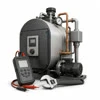
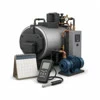
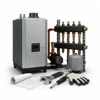
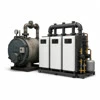
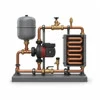
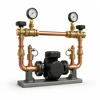

Commercial boiler and hydronic heating service follows heat from the plant through pumps, piping, valves, coils or terminals, controls, water condition, and representative spaces. ClimateService supports authorized Chicago facilities with repair, maintenance, installation, replacement, hydronic-system service, balancing, and seasonal operating work. Residential heating, chiller plants, BAS-first work, and generic capital planning retain their own owners.
Use this branch for boiler-first and hydronic-first needs
This category fits when the defining system is a commercial boiler, hot-water heating loop, hydronic distribution system, or boiler-specific operating procedure. A generic no-heat complaint stays with broad commercial repair until the equipment is identified. Chiller, cooling-tower, fan-coil, controls, pricing, and replacement-planning intent routes to the appropriate neighboring page.
Connect the boiler plant with delivered heating
Useful heat depends on boiler operation, firing and safeties, heat exchange, pumps, expansion control, air removal, water pressure, valves, piping, coils, terminal equipment, controls, and building load. Service does not stop when a boiler enables. It checks whether the plant produces stable heat and whether the hydronic path can deliver it without hiding downstream restrictions or control problems.
Route confirmed failures to commercial boiler repair
Lockouts, no heat, unstable temperature, leaks, abnormal sound, failed ignition, nuisance trips, poor circulation, and repeated resets belong to boiler repair when the equipment family is known. Diagnosis remains inside the repair owner at this stage. The repair page documents cause, authorized correction, restart, safeties, and limits rather than treating every symptom as a parts request.
Use boiler maintenance for recurring reliability work
Commercial boiler maintenance owns planned inspection, cleaning, combustion and safety checks at an appropriate level, operating records, pumps, accessible valves, controls, water-side observations, and documented follow-up. It complements building PM programs but does not replace broad portfolio maintenance. Boiler-specific findings route into repair, hydronic service, balancing, or replacement.
Separate installation from replacement decisions
Boiler installation owns a defined project where a boiler system has been selected and coordination is required across equipment, piping, venting, power, fuel, controls, drainage, access, startup, and commissioning. Boiler replacement and upgrade owns known-equipment changeout and modernization. Earlier budgeting, alternatives, phasing, and capital approval remain under replacement planning.
Give the hydronic system its own service boundary
Heating complaints often involve pumps, air separators, expansion tanks, strainers, valves, piping, coils, terminal devices, pressure, temperature, or trapped air rather than the boiler vessel itself. Hydronic-system service owns this loop-first meaning. Fan-coil equipment and building automation remain separate when their components or programming become the primary request.
Use balancing for flow and distribution problems
Uneven heating, short circuits through nearby branches, starved remote loads, excessive differential pressure, valve authority problems, unstable pump operation, and poor delta-T can require hydronic balancing and loop service. The balancing page owns water-side distribution and measured correction. Airside TAB remains in Air Distribution/DX, while controls-first optimization remains in Controls/BAS.
Keep boiler startup, shutdown, and layup specific
Pre-season startup, controlled shutdown, restart after an outage, and off-season layup require boiler-specific procedures, inspection, water and pressure checks, pumps, safeties, controls, venting, and operating proof. This owner does not absorb general spring or fall HVAC readiness. Findings that require repair, maintenance, or replacement are documented and routed.
Account for controls without taking over BAS
Enable signals, staging, reset, pump commands, proof, valve position, safeties, outdoor sensors, local controllers, and BAS points influence plant behavior. Boiler and hydronic service verifies commands against physical response far enough to establish the system boundary. Network integration, supervisory programming, and automation modernization remain with Controls/BAS.
Protect water-side integrity and mechanical-room assets
Leaks, corrosion, air, makeup water, expansion behavior, relief discharge, strainers, insulation, drains, treatment interfaces, and freeze exposure affect reliability. Service records visible conditions and the responsibility boundary without inventing water-chemistry conclusions. Active leakage, unsafe conditions, or inaccessible components receive immediate containment and facility coordination.
Verify operation under available load
Verification can connect calls for heat, boiler stages, pumps, pressure, temperatures, delta-T, valve response, safeties, alarms, shutdown, restart, and representative terminals or spaces. Weather and building load may limit full proof. Readings are tied to the tested operating condition rather than generalized across the season. The closeout states what was observed, what was tested, and what requires trending or a return visit.
Receive a plant-to-space service record
ClimateService documents equipment identity, service owner, complaint, operating history, boiler condition, pumps, distribution, controls, water-side observations, confirmed cause, completed work, measurements, safety tests, restart, representative results, limitations, open interfaces, and next actions. The record also identifies shutdown reach, seasonal constraints, unavailable tests, trend needs, and the accountable owner for each unresolved dependency. Facility teams receive a practical baseline rather than overlapping generic recommendations.