

Heating service should begin with the system in the home and the outcome the homeowner needs. A no-heat furnace call requires a different diagnostic path than uneven radiator heat, a cold-climate heat-pump decision, or a planned equipment replacement. ClimateService organizes residential heating work around those differences so the first service path matches the equipment, urgency, and project stage.
Choose the heating service that matches the situation
The Heating section is the starting point when the equipment or next step is still unclear. Once the request is specific, the most useful page is the owner for that service—not another generic “heating near me” page.
| What is happening | Recommended starting point | What that page owns |
|---|---|---|
| Heat is out, performance changed, or the system needs evaluation | Heating Repair & Maintenance | Broad residential heating service and routing by system type |
| A furnace has a specific fault or urgent no-heat condition | Furnace Repair | Furnace diagnostics, repair decisions, and symptom-specific service |
| The furnace needs scheduled seasonal care | Furnace Maintenance | Tune-ups, maintenance scope, and seasonal readiness |
| A new furnace is being added | Furnace Installation | New installation, fuel, configuration, venting, and related upgrades |
| An existing furnace is being changed out | Furnace Replacement | Repair-or-replace decisions and replacement project scope |
| The home uses radiators or a hydronic loop | Boiler & Hydronic Heating Services | Residential boiler service, maintenance, installation, and project review |
| The homeowner is considering electric heating and cooling from one system | Air-Source Heat Pump Heating | Cold-climate operation, backup heat, repair, installation, and dual-fuel decisions |
Repair, maintenance, installation, and replacement are different decisions
Repair addresses a defined operating problem. Maintenance is scheduled work intended to assess condition, support reliable operation, and identify concerns before the coldest demand. Installation describes a new heating-system project where the required system or distribution path is being established. Replacement begins with existing equipment and a changeout decision. Keeping those intents separate makes the service recommendation clearer and prevents a replacement conversation from being presented as the automatic answer to every repair call.
When the correct path is not obvious, the evaluation considers the equipment type, present condition, service history, comfort pattern, controls, distribution system, and the homeowner’s plans for the property. A recommendation can remain repair-first, move to scheduled maintenance, or become a larger project review. It should not be decided from a single symptom or from age alone.
Residential heating systems covered by this section
Chicago homes use more than one kind of heat. Forced-air furnaces remain common, but boilers and hydronic distribution are important in older housing, while air-source and geothermal heat pumps introduce different controls and operating behavior. Thermostats, humidifiers, UV equipment, and media filtration may affect comfort or system operation without becoming the primary heating appliance.
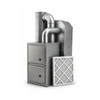
- Furnaces: repair, scheduled maintenance, installation, replacement, airflow context, venting context, and fuel-type project framing.
- Boilers and hydronic heating: residential service, annual maintenance, installation conversations, radiator or loop performance, and larger project review.
- Air-source heat pumps: heating-mode repair, cold-climate application, auxiliary or backup heat, installation and replacement, and heat-pump-versus-furnace decisions.
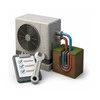
- Ground-source geothermal systems: a separate narrow family for geothermal service and project evaluation.
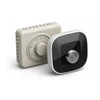
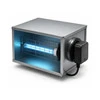
- Controls and add-ons: traditional and smart thermostats, HVAC UV lights, whole-house humidification, and related compatibility checks.
What professional heating work should clarify
A useful service visit or project conversation produces more than a list of components. The homeowner should understand what was evaluated, what condition was found, which work is recommended now, what can be planned later, and where the boundary lies between a focused repair and a larger equipment decision.
For repair and maintenance, that means confirming the complaint, evaluating relevant system operation, defining the approved work, and verifying the result. For installation and replacement, it means confirming the project scope, equipment and distribution context, controls, venting or electrical considerations where applicable, and the verification expected at handoff. Exact scope depends on the system and the home; the site does not publish invented package prices or promise that every project has the same configuration.
Heating service for Chicago homes and nearby suburbs
Local heating decisions are shaped by long winter run times, older and newer housing layouts, mixed equipment histories, and the practical need to keep a home usable during cold weather. ClimateService provides residential HVAC service in Chicago and nearby suburbs with 24/7 availability and same-day service capability, without representing a fixed arrival time or promising that every installation can be completed on the day of the first call.
The company is licensed and insured, carries $1 million in general liability coverage, can provide a certificate of insurance and additional-insured documentation when required, and holds EPA 608 Type II certification for refrigerant work. Those credentials support the work; they do not replace a page-specific explanation of what the service includes.
Where the Heating section stops
This section is residential. Commercial rooftop units, facility boiler plants, process systems, restaurant refrigeration, and transport refrigeration follow different service branches. Plumbing beyond the defined water-heater or hydronic equipment scope and electrical work upstream of the HVAC disconnect may require another trade. The page also does not provide DIY gas, combustion, high-voltage, refrigerant, or equipment-bypass instructions.
A clearer next step for the heating system
Start with the page that owns the current need: a specific furnace symptom, scheduled maintenance, a new installation, a replacement decision, thermostat work, boiler service, or heat-pump planning. When the system or decision is still uncertain, the broad Heating Repair & Maintenance or Heating Installation & Replacement owners provide the correct routing without forcing the request into the wrong equipment family.