
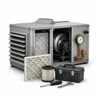
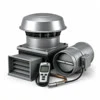


Commercial ventilation and indoor air quality services address how outside air enters, exhaust leaves, replacement air supports operations, filtration and equipment treat the airstream, and pressure relationships affect occupied or specialized spaces. ClimateService routes authorized Chicago work into make-up-air service, exhaust ventilation, IAQ, and specialized pressure control while keeping ductwork, TAB, kitchen-industry ventilation, BAS, generic repair, and capital projects under their proper owners.
Use this category for ventilation-first intent
The branch owns requests led by ventilation, outside air, make-up air, exhaust, commercial indoor air quality, or specialized environmental pressure. Duct repair and TAB route to Air Distribution/DX when physical distribution or balancing is primary. Rooftop units, controls, generic HVAC repair, kitchen-industry systems, and broad replacement stay separate even though each may interact with ventilation.
Understand the outside-air pathway
Intakes, louvers, screens, dampers, filters, coils, fans, energy recovery where present, ducts, controls, sensors, terminals, and building pressure determine whether outside air reaches the intended areas. Outdoor contaminants, weather, snow, moisture, nearby exhaust, and blocked access can affect the pathway. Service compares commanded and measured operation with physical equipment and space conditions.
Route make-up-air unit needs precisely
Make-up air replaces air removed by exhaust and may filter, heat, cool, or temper the incoming stream. The dedicated page owns MUA equipment-first service, including fans, coils or heat sections where applicable, filters, dampers, controls, safeties, discharge, and building response. Restaurant-specific kitchen ownership remains outside when the industry signal, hood, or process exhaust is primary.
Own general exhaust ventilation separately
Exhaust fans and systems remove air from restrooms, storage, general process, mechanical, and other commercial areas according to their intended use. The exhaust page owns fan, drive, damper, control, airflow, discharge, replacement-air relationship, and access issues outside kitchen-specific ownership. Ductwork repair may be coordinated when the physical path is the proven first need.
Approach IAQ as a source-path-control problem
Commercial IAQ concerns can involve outdoor air, filtration, moisture, temperature, pressure, airflow, equipment cleanliness, drains, building materials, occupancy, activities, sources, and operations. A product-first answer is rarely sufficient. The IAQ page organizes evidence and HVAC corrective scope without promising medical conclusions, regulatory compliance, or a universal device solution.
Serve specialized spaces without inventing compliance
Some commercial areas require intentional airflow direction, pressure difference, ventilation rate, filtration, temperature, humidity, monitoring, alarms, or recovery behavior. The specialized-environment page owns service and verification of those HVAC relationships. Healthcare, laboratory, cleanroom, life-safety, process, and code criteria remain with responsible designers, owners, and authorities rather than being asserted from a generic service visit.
Separate ventilation from air distribution
Ventilation focuses on outside air, exhaust, replacement air, IAQ, and pressure purpose. Air distribution focuses on ducts, fan coils, split systems, TAB, and delivered air through the building. The same duct may carry ventilation air, but ownership follows the search and project intent. This separation prevents make-up-air and duct-repair pages from competing for the same broad terms.
Verify controls against physical air movement
Schedules, occupancy modes, damper commands, fan starts, proof, pressure sensors, airflow stations, alarms, safeties, and BAS interfaces influence ventilation. Service compares screen values with damper position, fan operation, pressure, airflow, and space conditions. BAS programming and integration route to Controls/BAS once the automation layer becomes the primary owner.
Include moisture and drainage evidence
Outside-air coils, cooling sections, energy-recovery devices, filters, ducts, insulation, pans, traps, drains, snow or rain entry, and surrounding humidity can create water or condensation. Moisture may also originate in roof, plumbing, or envelope systems. Ventilation service documents the HVAC path and assigns unrelated sources rather than making unsupported IAQ or remediation claims.
Coordinate pressure with building operations
Supply, return, exhaust, transfer, doors, shafts, elevators, stack effect, wind, schedules, loading docks, and process operation influence pressure. One snapshot cannot describe every condition. Service records operating state and uses representative measurements, trends, or staged tests where appropriate. Specialized criteria and building-wide design changes require responsible review beyond routine equipment service.
Choose the correct ventilation service route
Use make-up-air service for MUA equipment, exhaust ventilation for general commercial exhaust, IAQ for air-quality-first investigation and HVAC corrections, and specialized pressure control for controlled environments. Use Air Distribution/DX for ductwork and TAB, restaurant-industry pages for kitchen ventilation, Controls/BAS for automation-first issues, and generic repair when the system is not yet known.
Receive an environment-focused handoff
ClimateService documents service owner, spaces, equipment and air paths, complaint or objective, operating conditions, airflow and pressure evidence where measured, controls, filtration, moisture, sources and facility context, completed work, representative results, limitations, open design or building interfaces, and follow-up. Facility teams gain a usable ventilation record without unsupported health or compliance promises.